

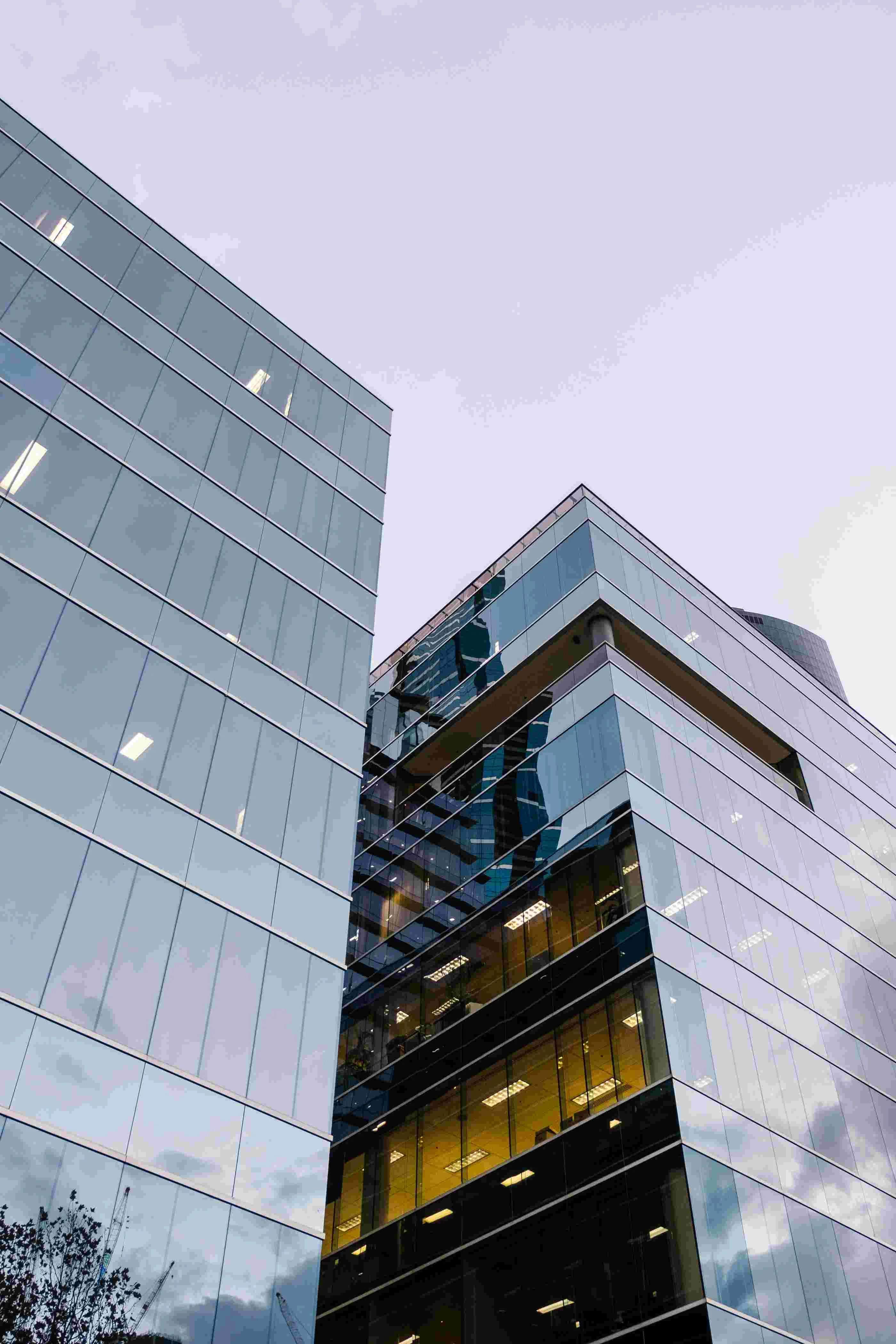

The glass that looks perfect in the sample room can make every product behind it look slightly wrong once it’s installed at full scale.
A glass storefront looks simple from the outside.
Large clear panels, minimal framing, a clean entrance and products clearly visible from the street.
But once you actually start specifying one, there are a surprising number of decisions hiding behind that simple appearance.
What type of glass should you use?
Should the facade be structurally glazed or point-fixed?
Is standard clear glass good enough?
Will the storefront become too hot in summer?
Does laminated glass make sense for security?
And perhaps most importantly, how much does a glass facade actually cost?
These are the questions that matter when you’re planning a showroom, retail store or commercial frontage.
What Is a Glass Facade?
A glass facade is an external building envelope or storefront system that uses large glass panels to create a transparent or visually open exterior.
In retail applications, the objective is usually more than just aesthetics.
A good glass facade needs to balance:
- Visibility
- Natural light
- Structural performance
- Safety
- Solar heat control
- Security
- Weather protection
- Energy efficiency
- Maintenance
- Overall cost
The glass is only one part of the system.
The framing, silicone, fittings, drainage, joints and installation all influence how the finished facade performs.
Why Are Glass Facades Popular for Showrooms?
Walk past a modern retail street and you’ll notice something quickly.
The stores that want people to look inside rarely hide behind solid walls.
They use glass.
A transparent storefront allows customers to see:
- Products
- Displays
- Lighting
- Interior design
- Branding
- Promotional installations
before they even enter the store.
That visual connection can be particularly valuable for fashion stores, automobile showrooms, furniture stores, electronics retailers and premium lifestyle brands.
Types of Glass Facade Systems
There isn’t one universal glass facade system.
Two common approaches for retail applications are structural silicone glazing and point-fixed glazing.
Structural Silicone Glazing
Structural silicone glazing, often abbreviated as SSG, uses structural-grade silicone to bond the glass to a supporting aluminium substructure.
From outside, much of the supporting framework is hidden.
The result is a clean facade with relatively uninterrupted glass surfaces.
This is one reason structural glazing is popular for modern commercial buildings and flagship retail stores.
Point-Fixed Glass Facades
Point-fixed systems use fittings at specific points on the glass rather than continuously framing the panel.
Spider fittings are a common example.
The fittings remain visible, giving the facade a more engineered or architectural appearance.
Point-fixed systems can also make individual glass panels easier to access or replace in certain designs.
Structural Glazing vs Point-Fixed Glazing
Neither system is automatically better.
The right choice depends on what you’re trying to achieve.
| Feature | Structural Glazing | Point-Fixed Glazing |
|---|---|---|
| Appearance | Minimal visible framework | Visible fittings |
| Design | Clean and seamless | Architectural |
| Large glass areas | Excellent | Excellent |
| Maintenance | Requires system-specific access | Individual panels can be accessible |
| Appearance from street | Very clean | More industrial/technical |
| Cost | Generally higher | Can be more economical |
| Best for | Premium storefronts | Architectural retail facades |
For a premium showroom where the facade needs to look almost frameless, structural glazing can make sense.
For projects where visible fittings are acceptable, point-fixed glazing can provide an attractive alternative.
Why Glass Clarity Matters More Than You Think
This is one of the details that often gets overlooked during the quotation stage.
A small sample of standard clear glass can look perfectly neutral.
Put that same glass across a large storefront and the difference becomes much easier to see.
Standard float glass naturally contains small amounts of iron oxide.
That gives it a subtle green appearance.
You may not notice it when looking through a small window.
On a large glass facade, however, the tint can become much more obvious, particularly when you’re looking at white walls, bright product displays or accurately coloured merchandise.

What Is Low-Iron Glass?
Low-iron glass, also called extra-clear glass, contains significantly less iron than standard float glass.
The result is:
- Better colour neutrality
- Higher visual clarity
- Less green tint
- More accurate product colours
- A cleaner premium appearance
For a retail storefront, this can be a worthwhile upgrade.
If your entire business depends on how products look through the glass, clarity isn’t a minor aesthetic detail.
It’s part of the customer experience.
A Koregaon Park Storefront Example
A retail project in Koregaon Park provides a good example of why glass specification should be considered before installation.
The storefront originally used standard toughened glass to keep the opening budget under control.
After installation, staff noticed that mannequins and product displays appeared to have a slight colour shift under the store’s interior lighting.
The issue wasn’t the lighting itself.
The standard glass was contributing a subtle green cast across the large panels.
The front-facing panels were eventually replaced with low-iron glass.
The lesson is fairly straightforward:
If colour accuracy matters to your business, specify glass clarity before the facade is fabricated—not after it is installed.
Does a Glass Facade Make a Store Too Hot?
It can.
This is especially important for storefronts facing east or west.
A large glass facade can receive substantial direct sunlight during parts of the day.
Without suitable solar-control measures, that can increase:
- Indoor temperature
- Air-conditioning load
- Glare
- Product fading
- Customer discomfort
This doesn’t mean you should avoid glass.
It means the glass needs to be specified according to the building’s orientation and climate.
Glass Partitions vs Drywall Partitions: Which Is Better for Your Office?
Read this blog
How Can Glass Facades Control Heat?
Several options can help manage solar heat gain.
Low-E Glass
Low-emissivity coatings can improve thermal performance while retaining relatively high transparency.
Solar-Control Glass
Solar-control glass is designed to reduce the amount of solar energy entering the building.
Solar-Control Film
Films can be applied to existing or new glass in some applications.
External Shading
Awnings, fins and other external shading devices can reduce direct solar exposure before the radiation reaches the glass.
For retail, this is particularly important because you don’t want to solve heat gain by making the storefront so dark that customers can no longer see the products clearly.
Should You Choose Reflective Glass?
Reflective glass can reduce solar gain and provide a distinctive exterior appearance.
But there is a trade-off.
During daylight hours, highly reflective glass can act almost like a mirror from outside.
That can reduce visibility into the store.
For an office building, that may not be a major problem.
For a retail showroom, it can defeat one of the primary reasons for having a glass facade in the first place.
That’s why solar control needs to be balanced with transparency and product visibility.
Toughened Glass for Glass Facades
Toughened glass is commonly used where safety and strength are important.
It is heat-treated to increase its mechanical strength compared with ordinary annealed glass.
If it breaks, it generally fractures into smaller pieces rather than large sharp shards.
However, toughened glass has an important limitation.
Once it breaks, the panel loses its integrity.
For a storefront, that can leave a large opening until the panel is replaced.
This is one reason laminated glass can be worth considering for certain commercial applications.
Laminated Glass for Security
Laminated glass consists of two or more glass layers bonded together with an interlayer.
If the glass cracks, the interlayer helps hold the broken pieces together.
That makes laminated glass useful where security and post-breakage integrity matter.
For retail environments, this can be particularly relevant to:
- Jewellery stores
- Electronics stores
- Luxury retail
- Ground-floor storefronts
- High-value showrooms
A laminated glass facade isn’t automatically burglar-proof, but it can provide a higher level of resistance than ordinary monolithic toughened glass.
Toughened vs Laminated Glass for a Storefront
The choice shouldn’t be based on strength alone.
Consider what happens after breakage.
Toughened glass:
- Strong
- Good safety characteristics
- Breaks into small pieces
- Does not remain as a continuous barrier after failure
Laminated glass:
- Multiple layers
- Holds together after cracking
- Better post-breakage integrity
- Can provide enhanced security
- Can also improve acoustic performance depending on the interlayer
For many commercial storefronts, a laminated or laminated-toughened specification can provide a better balance of safety and security.
Glass Facades and Security
A beautiful glass facade is not necessarily a secure glass facade.
For retail stores, security needs to be considered alongside the facade design.
Depending on the location and business, you may need to consider:
- Laminated glass
- Security films
- Stronger fittings
- Access-controlled doors
- Shutters
- Security systems
- CCTV
- Alarm integration
Jewellery and electronics retailers may have very different security requirements from a clothing showroom.
The facade should therefore be designed around the actual risk.
How Much Does a Glass Facade Cost in India?
There is no single price for a glass facade.
The existing Haimish article gives an indicative range of approximately ₹900–₹1,400 per sq. ft. for retail glass facade systems, depending on the system type, glass specification and coatings.
But don’t treat that as a universal market rate.
The final price can change substantially depending on:
- Glass thickness
- Glass type
- Panel size
- Low-iron glass
- Laminated glass
- Solar-control coatings
- Structural glazing
- Point-fixed fittings
- Aluminium substructure
- Doors
- Hardware
- Access requirements
- Site conditions
- Installation height
A quote based only on the facade area isn’t enough.
You need to know what is included in the specification.
Why Two Glass Facade Quotes Can Be Completely Different
Imagine two vendors quote ₹1,000 and ₹1,300 per sq. ft.
At first, the ₹1,000 quote looks better.
But then you discover that one uses standard clear toughened glass while the other uses low-iron laminated glass with solar control.
The two prices aren’t really comparable.
This is why when comparing glass facade quotations, ask for a line-by-line specification.
Check:
- Glass make
- Glass thickness
- Glass composition
- Interlayer
- Coating
- Frame/system
- Hardware
- Silicone
- Installation
- Access equipment
- Warranty
Only then can you compare the numbers fairly.
Glass Facades for East- and West-Facing Showrooms
Orientation deserves special attention.
East-Facing Facade
Morning sun can create glare and heat gain.
West-Facing Facade
Afternoon and evening solar exposure can be particularly challenging.
North-Facing Facade
Depending on the location and building design, direct solar exposure may be lower.
South-Facing Facade
The amount of solar exposure depends heavily on latitude, shading and facade design.
For Pune projects, the building’s orientation and surrounding structures should be considered before selecting the glass specification.
Glass Facades and Energy Efficiency
A large glass facade can either work with your building’s energy strategy or work against it.
The difference is in the specification.
A good facade design considers:
Solar heat gain + visible light + insulation + ventilation + shading + air-conditioning requirements
rather than simply choosing the clearest glass available.
This is particularly important for large retail spaces where the air-conditioning system runs for long hours.
What About Glass Facade Maintenance?
Glass itself is relatively straightforward to maintain.
The bigger consideration is access.
A ground-floor storefront can be cleaned relatively easily.
A multi-storey glass facade may require:
- Lifting equipment
- Rope access
- Maintenance platforms
- Special cleaning systems
The facade should therefore be designed with future maintenance in mind.
A beautiful facade that is extremely difficult to clean can become expensive over its lifetime.
Common Glass Facade Mistakes
Choosing the Cheapest Glass
The cheapest glass may not provide the clarity, solar control or security the project requires.
Ignoring Glass Colour
Standard clear glass can have a visible green tint across large panels.
Treating All Glass as the Same
Toughened, laminated, low-iron and solar-control glass perform differently.
Ignoring Solar Orientation
A west-facing glass facade can behave very differently from a shaded facade.
Comparing Quotes Without Comparing Specifications
A cheaper quote may simply be offering a different product.
Forgetting Maintenance Access
Think about how the facade will be cleaned after installation.
Leaving Security Until the End
Security requirements can influence the glass and hardware specification from the beginning.
Glass Facades for Different Types of Businesses
Fashion Showrooms
Low-iron glass can be valuable where colour accuracy is important.
Jewellery Stores
Security and laminated glass become more important.
Electronics Showrooms
Large clear displays are useful, but solar control can help protect products and improve customer comfort.
Furniture Showrooms
Large uninterrupted glass areas can help customers see the showroom from outside.
Automobile Showrooms
Large glass facades can maximise visibility of vehicles and create a premium street presence.
Restaurants and Cafés
Glass can create a stronger connection between the interior and the street while bringing in natural light.
Glass Facade vs Aluminium-Clad Facade
Glass and solid aluminium panels solve different problems.
Glass provides:
- Transparency
- Natural light
- Product visibility
- Visual openness
Aluminium cladding provides:
- Privacy
- Solid appearance
- Greater control over openings
- Different architectural finishes
Many modern commercial buildings use both.
A glass facade doesn’t have to mean that every square metre of the external wall is glass.
A combination of glass and solid panels can often provide a better balance.
How to Choose the Right Glass Facade System
Before approving the final design, ask these questions:
What Does the Store Need to Communicate?
Premium? Open? Minimal? Industrial? Luxury?
The facade should support the brand.
How Much Natural Light Is Required?
More glass isn’t always better if it creates excessive heat or glare.
How Important Is Product Colour Accuracy?
If it’s critical, consider low-iron glass.
How Much Security Is Required?
Ground-floor retail may need a different specification from an upper-floor showroom.
What Is the Building Orientation?
East and west exposure can significantly influence solar-control requirements.
How Will the Facade Be Maintained?
Plan access before installation.
What Is the Long-Term Budget?
Don’t look only at the installation cost.
Consider cleaning, replacement, energy consumption and future repairs.
Frequently Asked Questions
What is the best glass for a retail facade?
There is no single best glass for every store. Low-iron laminated or laminated-toughened glass can be an excellent option when clarity, safety and security are important, while solar-control coatings may be appropriate for sun-exposed facades.
How much does a glass facade cost per square foot?
Indicative retail facade costs can be around ₹900–₹1,400 per sq. ft., but the actual price depends heavily on the glass, system, fittings, coatings, panel sizes and installation requirements.
Is structural glazing better than point-fixed glazing?
Not necessarily. Structural glazing provides a cleaner, more seamless appearance, while point-fixed systems offer a more visible architectural aesthetic and can be practical for certain applications.
Is toughened glass safe for storefronts?
Toughened glass provides good safety characteristics, but once it breaks it loses its continuous barrier. Laminated glass can provide better post-breakage integrity.
Does a glass facade increase heat inside a showroom?
It can, particularly on strongly sun-exposed elevations. Solar-control glass, Low-E coatings and external shading can help reduce heat gain.
Why does large glass look green?
Standard float glass contains iron oxide, which can produce a subtle green tint. The effect becomes more noticeable across large panels.
Is low-iron glass worth the additional cost?
For retail environments where product colour and visual clarity matter, it can be a worthwhile upgrade.
Final Verdict
A successful glass facade isn’t simply about installing the largest possible glass panels.
It’s about getting the glass, structure, security, solar control and installation working together.
For a retail showroom, start by deciding what the facade needs to accomplish.
If visibility is the priority, clarity matters.
If the store receives strong sunlight, solar control matters.
If security is important, laminated glass deserves serious consideration.
If you want an almost frameless appearance, structural glazing may be the right direction.
And if you’re comparing quotes, don’t compare only the number at the bottom.
Compare the specification behind the number.
That’s where the real difference between two glass facades usually becomes visible.

