

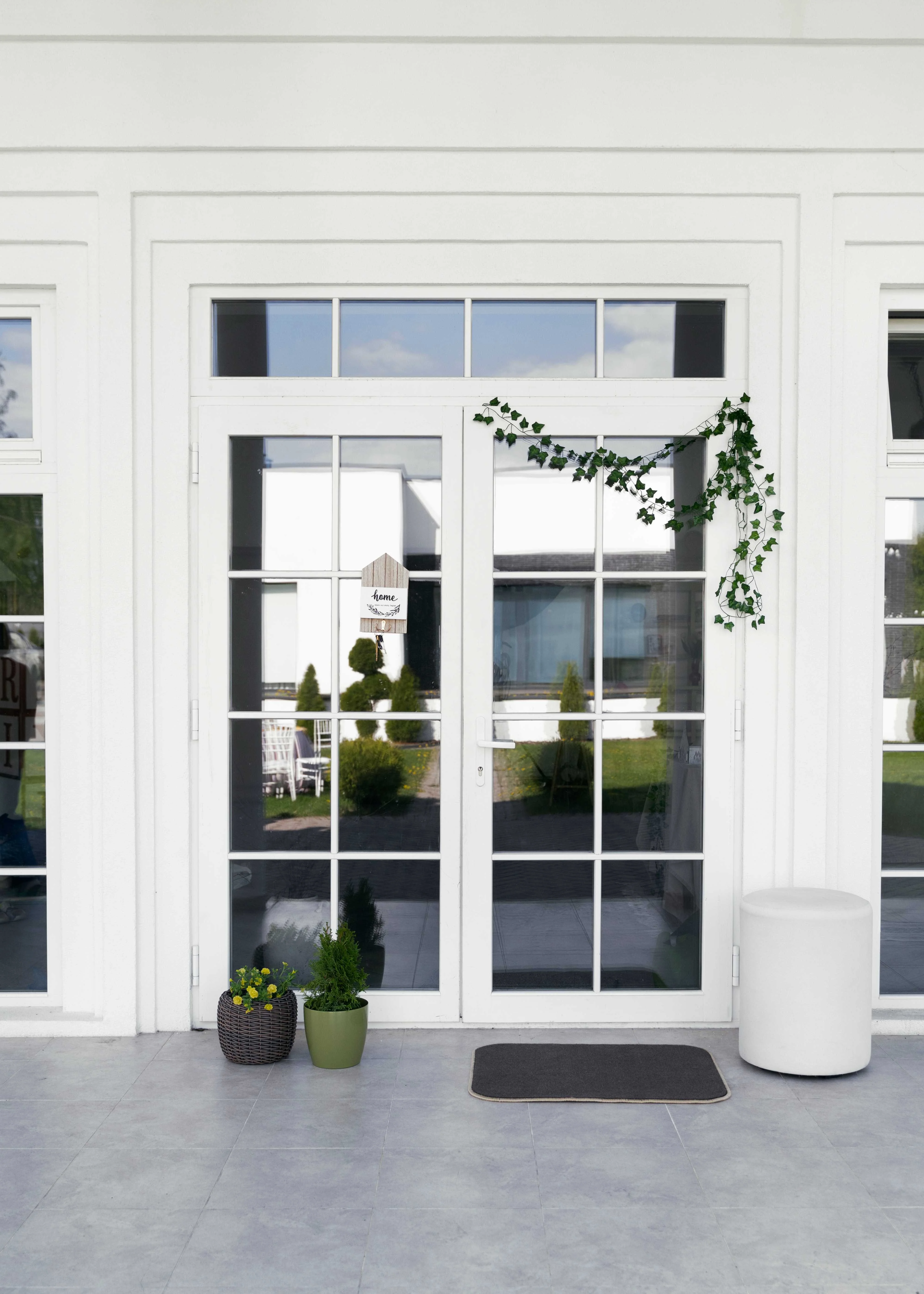

Windows and doors have a bigger impact on a home than we often realise. They affect how much daylight comes inside, how easily a room can be ventilated, how quiet it feels and how comfortable the space remains through changing weather.
That is why uPVC doors and windows have become a popular choice for modern homes, apartments and commercial spaces.
uPVC combines low maintenance with good insulation, durability and design flexibility. From simple casement windows to sliding systems and folding doors, there are several configurations available depending on the space and how you want it to function.
But choosing uPVC is not just about choosing a frame. The profile, chambers, reinforcement, glass, hardware, seals and installation all contribute to the final performance.
Here is what you should know before choosing uPVC doors and windows for your project.
What Are uPVC Doors and Windows?
uPVC stands for unplasticised polyvinyl chloride. Unlike flexible PVC products, uPVC is a rigid material commonly used for building applications such as windows and doors.
A uPVC window or door typically consists of:
- uPVC profiles
- Internal reinforcement where required
- Glass
- Gaskets and seals
- Hinges, handles and locks
- Drainage channels
- Other system-specific hardware
The profile provides the frame, while the glass and hardware influence important aspects of the system’s thermal performance, security, ventilation and everyday operation.
Haimish offers uPVC doors and windows as part of its wider range of window and door systems, alongside aluminium solutions. Its product range includes casement, sliding, tilt & turn and bay windows as well as bi-fold and tilt & slide door systems.
Why Choose uPVC Doors and Windows?
The popularity of uPVC comes down to a combination of practical benefits rather than one single feature.
Good Thermal Insulation
uPVC is naturally less conductive than metals such as aluminium.
This can help reduce heat transfer through the frame and contribute to a more comfortable indoor environment.
The overall thermal performance still depends on the complete window, including the glass, profile design, seals and installation.
Low Maintenance
One of the biggest attractions of uPVC is how little routine maintenance it requires.
Unlike timber, it doesn’t normally need regular painting or polishing.
For most applications, regular cleaning and occasional hardware checks are enough.
Good Weather Resistance
Quality uPVC systems are designed to handle normal exposure to rain, sunlight and changing temperatures.
This makes them suitable for many Indian homes, including properties exposed to Pune’s seasonal monsoon.
However, good drainage, seals and installation are just as important as the profile itself. Haimish’s Pune monsoon guide explains how drainage channels, gaskets and sealant installation affect real-world water performance.
Noise Reduction
uPVC windows can help reduce outside noise, but the frame material alone doesn’t determine acoustic performance.
The glass specification, number of panes, air gaps, seals and installation all matter.
For homes near busy roads or commercial areas, acoustic requirements should therefore be discussed before selecting the final glazing.
Durable Construction
Good-quality uPVC systems can provide long-term performance when they are correctly manufactured, reinforced, installed and maintained.
The hardware also matters. A strong frame paired with poor-quality handles, rollers or hinges can still create problems during everyday use.
Multiple Design Options
uPVC is available in different window and door configurations.
Depending on the system, you can choose from:
- Casement windows
- Sliding windows
- Tilt & turn windows
- Bay windows
- Fixed windows
- Sliding doors
- Folding doors
- Tilt & slide systems
This makes uPVC adaptable to different room layouts and architectural styles.
Modern Window Designs for Pune Homes: Styles, Materials and Ideas
Read this blog
Types of uPVC Windows
The right window configuration depends on the size of the opening, available space, ventilation requirements and how you want to operate the window.
uPVC Casement Windows
Casement windows are hinged and open from one side.
They can provide a relatively wide opening for ventilation and are suitable for bedrooms, living rooms, kitchens and other residential spaces.
They are also a practical option when airflow is a priority.
uPVC Sliding Windows
Sliding windows operate horizontally along a track.
Because the panels don’t swing into the room, they are useful where space is limited.
They can work well for:
- Bedrooms
- Apartments
- Balconies
- Living rooms
- Compact spaces
uPVC Tilt & Turn Windows
Tilt & turn windows provide two opening positions.
The window can tilt for controlled ventilation or turn for a wider opening.
This makes them useful for homeowners who want more flexibility from a single window.
uPVC Bay Windows
Bay windows project outward from the building and can add architectural character to both the exterior and interior.
They can also create a wider field of view and allow more daylight into the room.
Fixed uPVC Windows
Fixed windows don’t open.
They are mainly used where the priority is natural light and views rather than ventilation.
They can be combined with operable windows to create larger glazed arrangements.

Types of uPVC Doors
uPVC isn’t limited to windows.
Different door systems can be used depending on the opening size and the relationship between indoor and outdoor spaces.
uPVC Sliding Doors
Sliding doors move along a track instead of swinging into the room.
They are particularly useful for balconies, patios and larger openings where floor space is valuable.
uPVC Folding Doors
Folding doors use multiple panels connected by hinges.
When opened, the panels fold and stack to the side, creating a much wider opening.
They can be useful for villas, living rooms, terraces and garden-facing spaces.
Haimish already has a dedicated guide on uPVC Folding Doors, so this section should link directly to that article.
uPVC Tilt & Slide Doors
Tilt & slide doors combine controlled ventilation with sliding operation.
They can provide ventilation without requiring the full door to be opened.
Applications of uPVC Doors and Windows
uPVC systems can be used across a wide range of residential and commercial applications.
uPVC Doors and Windows for Homes
In homes, uPVC windows and doors can be used in:
- Bedrooms
- Living rooms
- Kitchens
- Bathrooms
- Balconies
- Home offices
- Terraces
- Staircases
The configuration can be selected according to the room’s ventilation, light and space requirements.
Aluminium Doors and Windows: Benefits, Features & Applications
Read this blog
uPVC Doors and Windows for Apartments
Apartments often benefit from space-efficient window and door systems.
Sliding windows and doors are particularly useful where there isn’t enough clearance for a conventional swinging opening.
uPVC Doors and Windows for Villas
Villas often have larger openings connecting interiors with gardens, balconies and terraces.
Larger uPVC sliding or folding systems can create a strong indoor-outdoor connection while maintaining the benefits of the material.
uPVC Doors and Windows for Offices
uPVC can also be used in selected commercial applications where thermal comfort, noise reduction and low maintenance are important.
The exact system should be chosen according to the size, usage and performance requirements of the building.
Are uPVC Doors and Windows Suitable for Pune?
They can be a practical choice for Pune homes and commercial projects.
Pune experiences hot summers followed by a strong monsoon, so the window specification needs to consider both heat and water exposure.
For Pune projects, pay attention to:
- Profile quality
- Number and design of chambers
- Reinforcement
- Glass specification
- Gaskets
- Drainage
- Hardware
- Installation quality
A well-designed drainage system is especially important during heavy rainfall. A uPVC frame is not simply a solid barrier against water; the system is designed to manage and drain small amounts of water through dedicated channels and openings.
How Do uPVC Windows Perform in the Monsoon?
A properly manufactured and installed uPVC window should be designed to manage normal rain exposure.
However, performance depends on more than the material.
Common causes of water leakage include:
- Blocked drainage channels
- Poorly fitted gaskets
- Damaged seals
- Incorrect installation
- Poor sealant work
- Inadequate drainage
- Excessive exposure to wind-driven rain
This is why choosing an experienced manufacturer and installer is important.
For Haimish’s audience in Pune, this section should link directly to the dedicated How uPVC Windows Perform in Pune’s Monsoon article.
uPVC Window Chambers: Why Do They Matter?
If you’ve looked at a cut section of a uPVC profile, you’ve probably noticed several hollow sections inside the frame.
These are called chambers.
The chambers can contribute to:
- Thermal insulation
- Structural stability
- Air resistance
- Overall profile performance
However, more chambers don’t automatically mean a better window.
The complete profile design, reinforcement, seals, glass and manufacturing quality need to be considered together.
This is an excellent place to internally link to Haimish’s existing Understanding uPVC Profile Chambers article.
Glass Options for uPVC Doors and Windows
The frame isn’t the only part that affects window performance.
Glass can influence:
- Thermal comfort
- Noise reduction
- Safety
- Solar control
- Natural light
- Overall energy performance
Single Glazing
Single glazing uses one pane of glass.
It can be suitable for some applications, but it generally provides less thermal and acoustic insulation than properly specified double glazing.
Double Glazing
Double glazing uses two panes separated by a sealed cavity.
It can improve thermal and acoustic performance compared with single glazing when the complete system is correctly specified.
Toughened Glass
Toughened glass is processed to improve its strength compared with ordinary annealed glass.
It is commonly considered where safety is an important requirement.
Laminated Glass
Laminated glass contains an interlayer between glass panes.
If the glass breaks, the interlayer helps hold the fragments together.
It can also provide useful acoustic and security characteristics depending on the specification.
For this section, link naturally to Haimish’s existing glazing articles rather than creating duplicate content.
uPVC Doors and Windows for Better Energy Efficiency
Energy efficiency isn’t determined by the frame alone.
A window’s overall performance depends on:
- uPVC profile
- Number and arrangement of chambers
- Glass type
- Glazing configuration
- Gaskets
- Air tightness
- Installation
- Orientation
For an air-conditioned bedroom, for example, selecting the right glazing may be just as important as selecting the profile.
This is why a complete system specification is more useful than simply asking, “Is this a uPVC window?”
uPVC Doors and Windows for Noise Reduction
If your home is near a busy road, railway line, airport or commercial area, sound insulation may be one of your priorities.
uPVC can provide a good base for acoustic performance, but the glass is particularly important.
Depending on the situation, homeowners may consider:
- Laminated glass
- Double glazing
- Different glass thicknesses
- Acoustic glazing
- Properly sealed frames
A poorly installed window can undermine the performance of an otherwise good glazing specification.
uPVC Doors and Windows Colours and Finishes
White is no longer the only option.
Depending on the system, uPVC windows and doors can be available in different colours and finishes.
Popular choices can include:
- White
- Grey
- Black
- Brown
- Wood-look finishes
- Neutral shades
The right colour depends on the building facade, interior design and overall architectural style.
For SEO, link this section to Haimish’s existing uPVC Window Colours article.
Are uPVC Doors and Windows Low Maintenance?
Yes, relatively.
One of the reasons homeowners choose uPVC is that it doesn’t usually require regular painting or surface treatment.
For routine maintenance:
- Clean the frames with mild soap and water.
- Wipe away dust and dirt.
- Keep drainage channels clear.
- Clean sliding tracks where applicable.
- Check seals periodically.
- Check handles and hardware.
- Don’t force a window or door that isn’t operating smoothly.
Small maintenance issues are easier to address before they become larger hardware or sealing problems.
uPVC Doors and Windows vs Aluminium
This is one of the most common comparisons homeowners make.
| Feature | uPVC | Aluminium |
|---|---|---|
| Thermal insulation | Naturally good | Depends on system |
| Strength | Good | High |
| Frame appearance | Generally thicker | Can be slimmer |
| Large openings | Depends on system | Excellent |
| Maintenance | Low | Low |
| Design options | Wide | Wide |
| Large glass areas | Depends on system | Well suited |
| Thermal-break requirement | Not generally applicable | Relevant for some systems |
Neither material is automatically better.
uPVC can be attractive for homeowners prioritising insulation and low maintenance.
Aluminium can be attractive where slim profiles, larger openings and contemporary architectural design are priorities.
Haimish already has a detailed uPVC vs Aluminium Windows comparison covering cost, thermal performance, maintenance, durability and glazing.
How Much Do uPVC Doors and Windows Cost?
There is no single price for a uPVC window or door.
The final cost depends on the complete specification.
Factors include:
- Window or door size
- Profile system
- Number of chambers
- Glass specification
- Single or double glazing
- Hardware
- Colour or finish
- Mosquito mesh
- Opening configuration
- Installation
- Site conditions
- Project quantity
This is why comparing suppliers purely on a price per square foot can be misleading.
A better comparison is to request the complete product specification and then compare like-for-like quotations.
What to Check Before Buying uPVC Doors and Windows
Check the Profile
Ask about the profile system, construction and intended application.
Understand the Chambers
Don’t assume that a higher chamber count automatically means better performance.
Look at the complete profile design.
Ask About Reinforcement
For larger windows and doors, appropriate reinforcement can be important for structural stability and hardware performance.
Check the Glass
Ask whether the quotation includes single, double, toughened, laminated, Low-E or other glazing.
Check the Hardware
Handles, hinges, rollers and locking mechanisms affect how the window or door feels and performs every day.
Ask About Drainage
Especially in Pune, drainage should not be treated as a minor detail.
Check Installation
Correct installation is essential for alignment, sealing, drainage and long-term performance.
Common Mistakes When Choosing uPVC Doors and Windows
Choosing Only on Price
A cheaper window may have a different profile, glass or hardware specification.
Focusing Only on Chamber Count
More chambers do not automatically make one system better than another.
Ignoring the Glass
The glass occupies most of the visible opening and can have a major impact on comfort and noise.
Overlooking Hardware
Poor-quality hardware can affect smooth operation even when the frame itself is good.
Ignoring Installation
A quality uPVC system still needs proper installation to perform as intended.
Choosing the Same Window for Every Room
A bedroom, bathroom, balcony and living room may have completely different ventilation and opening requirements.
Frequently Asked Questions About uPVC Doors and Windows
Are uPVC doors and windows good for Indian homes?
Yes. uPVC can be a practical choice for Indian homes because of its low maintenance, insulation properties and resistance to common weather exposure.
Are uPVC windows suitable for Pune?
Yes. They can be suitable for Pune when the profile, glass, drainage, seals and installation are properly specified for local conditions.
Are uPVC windows better than aluminium?
Not in every situation. uPVC can offer good thermal insulation and low maintenance, while aluminium is often preferred for slimmer profiles and larger openings.
Do uPVC windows reduce outside noise?
They can help reduce outside noise, but the overall result depends heavily on the glass, seals, profile and installation.
Do uPVC windows require painting?
Generally, no. One of the benefits of uPVC is that routine maintenance does not normally involve repainting.
Are uPVC doors waterproof?
Quality uPVC door systems are designed to resist normal weather exposure, but no window or door should be described as completely waterproof. Drainage, seals and installation play an important role in keeping water out.
How long do uPVC doors and windows last?
Their service life depends on the quality of the profile, glass, hardware, installation, exposure and maintenance. A properly specified system can provide long-term service.
Can uPVC windows have double glazing?
Yes, provided the selected profile and glazing system are designed to accommodate the required glass specification.
Are uPVC doors suitable for balconies?
Yes. Sliding and folding uPVC door systems can be suitable for balconies and other large openings, depending on the project requirements.

