

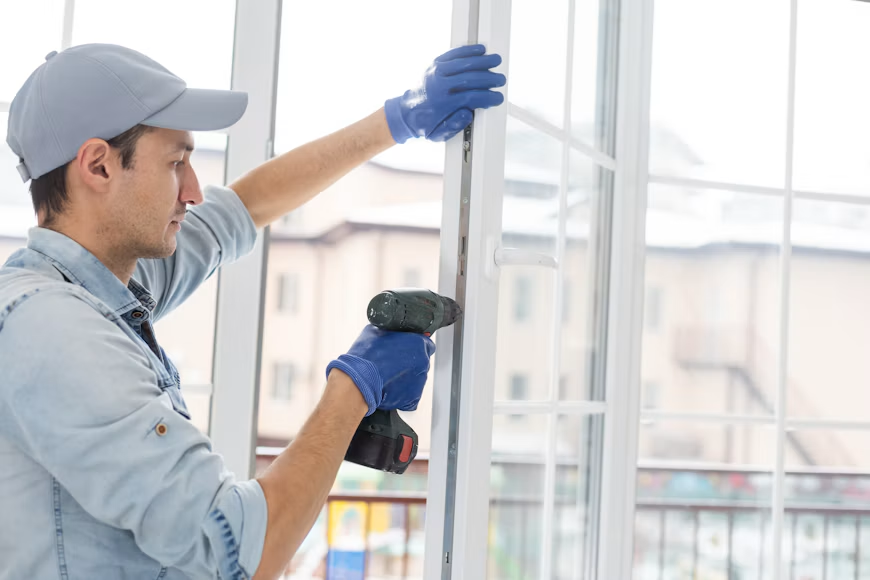

Choosing a high-quality window is only half the job. Even the best uPVC or aluminium window can perform poorly if it is measured, installed, sealed or finished incorrectly.
This is why window installation mistakes are worth understanding before starting a new construction or renovation project.
Problems such as water leakage, air drafts, difficult operation, noise, loose frames and damaged seals are not always caused by the window itself. In many cases, the installation process is responsible.
For homeowners in Pune, proper installation becomes even more important because windows have to handle strong sunlight, dust, seasonal rain and heavy monsoon conditions.
In this guide, we explain the most common window installation mistakes, why they happen and what homeowners should check before the installation is completed.
What Are the Most Common Window Installation Mistakes?
The most common window installation mistakes include incorrect measurements, poor frame alignment, inadequate sealing, blocked drainage, improper fixing, unsuitable glass selection and insufficient finishing around the frame.
Some problems may not be immediately visible. A window can look perfectly finished on installation day and still develop leakage, operational or sealing problems later.
The following mistakes are particularly important to avoid.
1. Taking Incorrect Window Measurements
Accurate measurement is one of the most important parts of window installation.
If the opening is measured incorrectly, the finished window may be too large, too small or incorrectly positioned.
Incorrect measurements can result in:
- Uneven gaps around the frame
- Excessive use of sealant
- Difficult installation
- Poor alignment
- Air leakage
- Water leakage
- Difficulty opening or closing the sash
Measurements should account for the actual site opening rather than relying only on architectural drawings.
For replacement projects, the existing opening should also be inspected carefully before fabrication begins.
Why Accurate Measurements Matter
Windows are generally manufactured according to the measurements provided before production.
A small measurement error can therefore become a much larger installation problem later.
The installer should verify the width, height, diagonals and condition of the opening before final fabrication.
2. Installing the Frame Out of Level
A window frame should be correctly positioned and aligned within the opening.
If the frame is not level, plumb and square, problems can develop with the moving parts.
You may notice:
- Sashes rubbing against the frame
- Uneven gaps
- Difficulty locking the window
- Rollers wearing faster
- Hardware becoming difficult to operate
- Poor sealing
A window may still look acceptable from a distance, which makes this problem easy to overlook.
How Can You Check Window Alignment?
Professional installers use appropriate measuring and levelling equipment during installation.
The frame should be checked before permanent fixing and again after the installation is completed.
The objective is simple: the frame must remain correctly positioned while the surrounding gap is secured and sealed.
3. Using Too Much or Too Little Sealant
Sealant plays an important role in protecting the joint between the window frame and the surrounding wall.
However, simply applying a large amount of sealant does not automatically make an installation better.
Too little sealant can leave gaps through which water and air can enter.
Poorly applied sealant can also crack, separate from the surface or create an uneven finish.
What Makes a Good Window Seal?
The surrounding surfaces should be properly prepared before applying the appropriate weather-resistant sealant.
The seal should be continuous where required and should be compatible with the frame and surrounding building materials.
The installer should also avoid covering drainage paths that are designed to allow water to escape from the window system.

4. Blocking the Window’s Drainage Holes
This is one of the most overlooked window installation mistakes.
Many window systems are designed with drainage channels and weep holes.
These allow water that enters the outer part of the system to drain safely to the exterior.
If these drainage openings are blocked with:
- Sealant
- Paint
- Cement
- Construction debris
- Dust
- Other materials
water can accumulate inside the frame.
Eventually, it may find its way toward the interior of the building.
Why Window Drainage Matters During the Monsoon
Pune’s monsoon can expose drainage problems very quickly.
A window does not necessarily need to be completely waterproof in the sense that no water ever enters any part of the frame.
Instead, properly designed systems manage small amounts of water through controlled drainage.
The important thing is that the drainage path remains clear.
5. Installing the Window Without Checking the Wall Opening
The condition of the surrounding wall matters just as much as the window.
If the masonry opening is uneven, cracked or unfinished, installing a new window without addressing the problem can create installation difficulties.
The installer should inspect:
- Opening dimensions
- Surface condition
- Sill condition
- Vertical alignment
- Horizontal alignment
- Cracks
- Moisture
- Existing sealant
A window should not simply be forced into an unsuitable opening.
When to Replace Windows: 9 Signs Your Home Needs New Windows
Read this blog
6. Choosing Glass Without Considering the Room
Another common mistake is selecting the frame first and treating glass as an afterthought.
Glass has a major influence on the overall performance of a window.
Depending on the project, homeowners may need to consider:
- Single glazing
- Double glazing
- Toughened glass
- Laminated glass
- Low-E glass
- Solar-control glass
- Acoustic glazing
The correct choice depends on the room and the building.
For example, a bedroom facing a busy road may have very different requirements from a bathroom window or a large living-room opening facing a garden.
Does Better Glass Always Mean Better Windows?
Not necessarily.
The glass, frame, seals, hardware and installation all work together.
Installing premium glass in a poorly installed frame will not automatically produce a high-performing window.
How to Choose the Right Windows and Doors
Read this blog
7. Using Inadequate Fixings
The window frame must be securely fixed to the surrounding structure.
The exact fixing method depends on the window system, opening and construction.
Using unsuitable fixings or placing them incorrectly can affect:
- Frame stability
- Alignment
- Hardware operation
- Long-term durability
- Weather performance
Fixings should be appropriate for the substrate and window system.
This is particularly important for larger windows and doors where the frame and glass assembly can be significantly heavier.
8. Ignoring the Sill and External Water Runoff
The bottom section of the window deserves special attention.
Water should have a controlled path away from the building.
If the sill or surrounding finishing directs water toward the interior rather than away from the wall, even a good window can experience water-related problems.
Before installation is completed, check that:
- Water can drain outward
- Drainage openings are unobstructed
- External sealant is properly finished
- The sill does not create an unwanted water trap
- The surrounding surface is properly finished
Good window installation includes the area immediately around the frame, not just the frame itself.
9. Installing Hardware Without Proper Adjustment
Window hardware affects how the window operates every day.
Handles, hinges, rollers, locking mechanisms and other components need to be installed and adjusted correctly.
A new window should not require excessive force to open or close.
After installation, check whether:
- The handle operates smoothly
- The sash opens correctly
- The locks engage properly
- Sliding panels move smoothly
- Hinges operate without resistance
- The sash sits correctly within the frame
If the window requires excessive force when it is brand new, the problem should be investigated rather than ignored.
10. Forgetting to Check the Window After Installation
One of the biggest mistakes homeowners make is assuming that the job is finished as soon as the frame is installed.
A final inspection should be part of the installation process.
What Should You Check?
Open and close every moving window.
Check the locks.
Inspect the seals.
Look at the frame from both sides.
Check the external sealant.
Make sure drainage openings are clear.
Look for visible gaps around the frame.
Check that the glass is free from damage.
For sliding windows and doors, operate every panel.
If something does not feel right, raise it immediately.
It is much easier to correct an installation issue while the installer is still on site.
11. Choosing the Cheapest Installation Quote
Price matters, but installation should not be evaluated on price alone.
Two companies may quote different prices for what appears to be the same window.
However, the actual specification may be completely different.
The quotation may differ in:
- Profile system
- Profile thickness
- Glass
- Hardware
- Number of locking points
- Sealants
- Installation method
- Finishing
- Warranty
- After-sales service
A low quotation can become expensive if poor installation leads to repeated repairs.
What Should You Compare Instead?
Ask every supplier for a detailed written specification.
Compare the actual products and installation process rather than comparing only the final price.
How Does Poor Window Installation Affect Performance?
Poor installation can cause problems even when the window itself is high quality.
Common consequences include:
Water Leakage
Incorrect sealing, blocked drainage and poor external finishing can allow water to enter during heavy rain.
Air Leakage
Gaps around the frame or poor seals can allow unwanted air movement.
Difficult Operation
Misaligned frames can make windows difficult to open, close or lock.
Noise Problems
A window may provide less acoustic protection than expected if the frame is poorly sealed or installed.
Premature Hardware Wear
Poor alignment can place unnecessary stress on hinges, rollers and locking components.
Reduced Comfort
Air and water leakage can affect indoor comfort and make the room feel less protected from outside conditions.
How Can You Prevent Window Installation Problems?
The easiest way to avoid installation problems is to pay attention to the entire process rather than focusing only on the finished appearance.
Before installation:
- Confirm the measurements
- Confirm the frame specification
- Confirm the glass specification
- Check the hardware
- Inspect the opening
- Discuss the installation method
During installation:
- Check frame alignment
- Check fixing
- Protect drainage openings
- Inspect sealing
- Avoid damaging the frame or glass
After installation:
- Operate every window
- Check locks
- Inspect seals
- Check drainage
- Inspect the surrounding finish
- Ask the installer to correct any visible issue
What Should You Ask Your Window Installer?
Before the project begins, ask these questions:
How will you measure the openings?
The installer should explain how measurements will be verified before fabrication.
What glass will be installed?
Ask for the glass type, thickness and configuration in writing.
How will the frame be fixed?
The installation method should be appropriate for the structure and window system.
How will water drainage be handled?
Ask where the drainage paths are located and how they will remain unobstructed.
What sealant will be used?
The installer should be able to explain what type of sealant is being used and where.
What hardware is included?
Ask about handles, locks, rollers, hinges and other fittings.
What happens if there is a problem after installation?
Understand the warranty and after-sales process before approving the work.
Are Window Installation Mistakes More Serious for uPVC or Aluminium Windows?
Installation quality matters for both.
uPVC and aluminium systems have different material characteristics and installation requirements, but neither can compensate for poor workmanship.
For uPVC windows, correct alignment, sealing, reinforcement, hardware adjustment and drainage are important.
For aluminium windows, frame alignment, fixing, glazing, sealing and structural considerations become particularly important, especially for larger openings.
The correct installation procedure should always follow the requirements of the selected window system.
How Much Does Proper Window Installation Cost?
Installation cost varies according to the project.
Factors can include:
- Number of windows
- Window size
- Building height
- Accessibility
- Existing window removal
- Wall condition
- New construction or renovation
- Glass specification
- Window configuration
- Finishing requirements
Instead of choosing an installer solely by installation price, consider the complete cost of the window, installation and long-term service.
Window Installation Checklist for Homeowners
Before signing off on the installation, use this quick checklist:
Before Installation
- Confirm window measurements
- Confirm frame material
- Confirm glass specification
- Confirm hardware
- Inspect the wall opening
- Confirm installation scope
During Installation
- Check frame alignment
- Check fixing points
- Ensure drainage paths remain clear
- Inspect the sealant application
- Protect glass and frames from damage
After Installation
- Open and close every window
- Test all handles
- Test locks
- Check sliding movement
- Inspect seals
- Check drainage openings
- Inspect external finishing
- Look for visible gaps or damage
Frequently Asked Questions About Window Installation
What is the most common window installation mistake?
Incorrect measurement and poor frame alignment are among the most important installation problems. Poor sealing and blocked drainage can also lead to serious water and air leakage issues.
How do I know if my windows were installed correctly?
Check that the frames are level and aligned, the windows operate smoothly, the locks engage properly, the seals are continuous and drainage openings are unobstructed. A professional inspection can provide a more detailed assessment.
Can poor window installation cause water leakage?
Yes. Water leakage can result from inadequate sealing, blocked drainage, poor sill detailing, incorrect frame positioning or problems around the opening.
Can a badly installed window be fixed?
Often, yes. The solution depends on the problem. Some issues can be corrected through adjustment or resealing, while serious alignment, fixing or frame problems may require partial or complete reinstallation.
Should windows be installed before or after painting?
The correct sequence depends on the construction and finishing method. In many projects, coordination between window installation, plastering, waterproofing and painting is important to prevent damage and ensure proper sealing.
How long does window installation take?
The time required depends on the number and size of windows, site conditions, whether old windows need to be removed and how much finishing work is required.
Is professional window installation worth it?
Yes, particularly for large, custom or high-performance window systems. Proper measurement, alignment, fixing, sealing and drainage can have a significant effect on the final performance of the window.
Final Thoughts
A good window can only perform as well as its installation allows.
Avoiding window installation mistakes starts with accurate measurements and continues through frame alignment, fixing, drainage, sealing, glazing and final inspection.
Whether you are installing uPVC windows or aluminium windows, don’t judge the installation only by how it looks on the day.
A properly installed window should operate smoothly, remain securely fixed, manage water correctly and provide the level of comfort and protection expected from the selected system.
For homeowners in Pune, professional installation is particularly important because windows must withstand heat, dust, seasonal weather and heavy monsoon conditions.
Before approving your next window project, ask your installer for a clear specification and inspect the completed installation carefully. A few checks during installation can prevent much more expensive problems later.

