

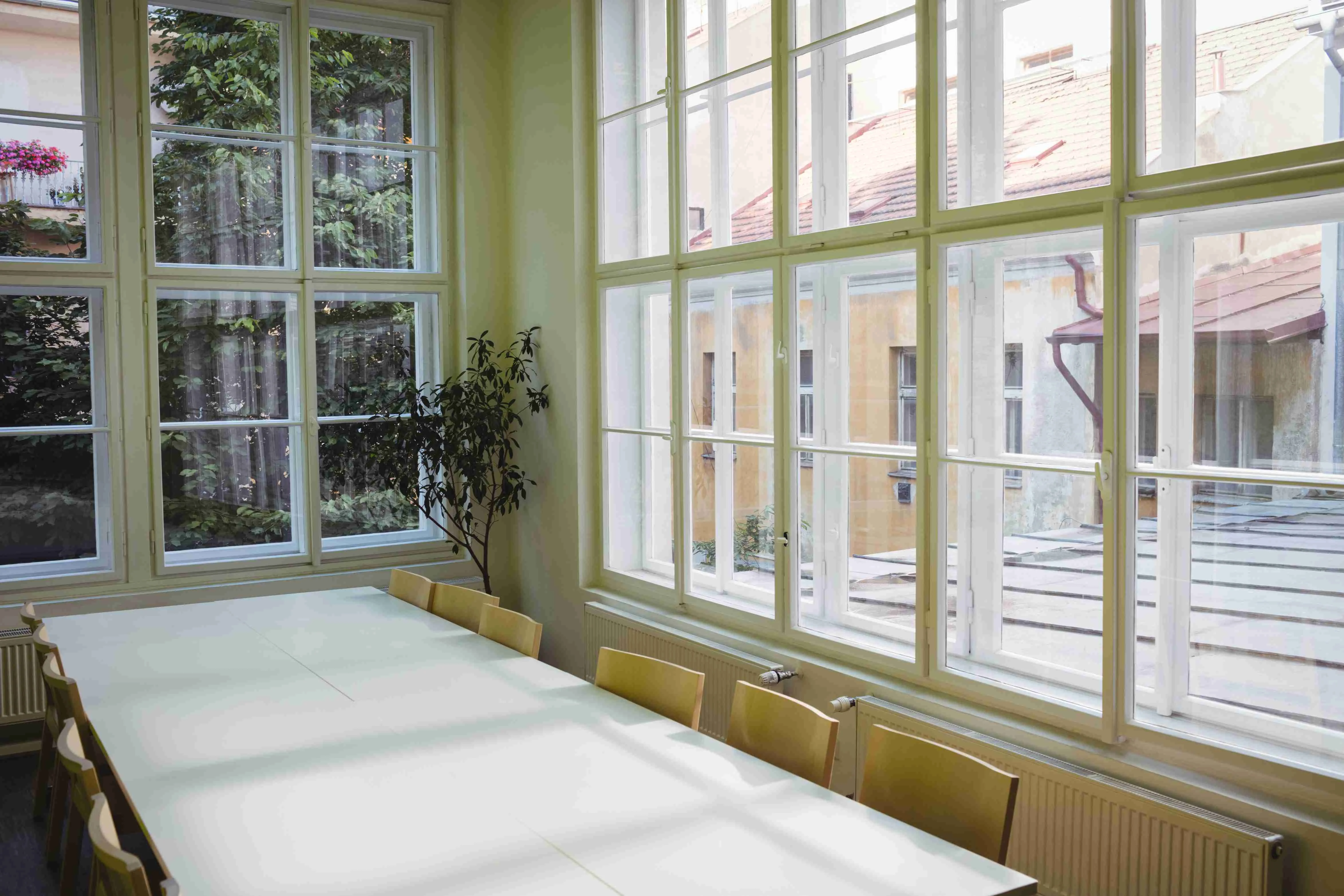

Three materials, three very different personalities, and only one of them is right for your specific site.
If you just want the short version: uPVC gives you the best balance of cost, insulation, and low maintenance for most Indian homes. Aluminum is the better call when you’re doing large glass facades or a modern, slim-profile look. Wood still looks unmatched, but only makes financial sense if upkeep genuinely doesn’t bother you. Everything past this point is the “why.”
Which One Actually Wins?
Depends on what you’re optimizing for, honestly. I’ve had this exact conversation on maybe 400 sites over the years, and the answer changes every single time someone tells me their budget, their pin code, and whether they’ve got kids who slam doors. There’s no universal winner here, and anyone who tells you otherwise is selling you something (which, fair enough, I am too, but I’d rather you buy the right thing).
What uPVC Gets Right (and Where It Falls Short)
Thermal performance is where uPVC quietly wins most arguments. The material doesn’t conduct heat the way Aluminum does, so in Pune’s April-May stretch you’ll feel a noticeable drop in how much the window frame itself radiates heat into the room. We usually see clients report their AC running maybe 12-15% less once they’ve swapped old iron-frame windows for uPVC, though that number moves around based on orientation and glass type.
Where it falls short: spans. If you want a single massive sliding panel for a living room that opens onto a balcony, uPVC frames start to feel chunky and the sashes get heavy past a certain width. Around 1.8 to 2 meters is where I start steering people toward multi-track systems or Aluminum instead.
Colour options have improved a lot too. It used to be white or nothing. Now you get woodgrain finishes that actually fool people at first glance, laminates in greys and browns, the works.
Aluminum’s Real Advantage Isn’t What Most Brochures Say
Every Aluminum brochure talks about strength and durability like uPVC is made of paper. That’s not really the honest pitch. The real reason architects reach for Aluminum is profile thinness. You get more glass, less frame, and that reads as “modern” in a way clients respond to immediately when they walk into a sample room.
The tradeoff nobody mentions upfront is thermal bridging. Untreated Aluminum conducts heat straight through, so unless you’re paying extra for thermal break profiles, that sleek frame is also quietly working against your cooling bill. Thermal break Aluminum closes most of that gap, but it adds cost, sometimes a meaningful chunk, sometimes not, depends on the vendor and the section size you’re ordering.
Aluminum also handles UV and structural load better over really large openings, which is why you see it dominate commercial facades and high-rise balconies where wind load calculations actually matter.
Wood Still Has a Place, Just a Smaller One
There’s a warmth to wood that neither uPVC nor Aluminum fully replicates, and I say that as someone who sells the other two. Teak or sal frames age with a character that laminate finishes are still trying to imitate. But the maintenance conversation is where most clients quietly back out once they hear the real numbers.
The Change How I Pitch Wood
A few years back I was on a bungalow renovation in Kondhwa where the owner insisted on teak for every window in the house, all fourteen of them, because that’s what her parents’ house had. We priced it out, and between the timber cost, the on-site fabrication, and the annual polish-and-seal maintenance, she was looking at nearly ₹9,40,000 more over a ten-year horizon compared to going uPVC for the bedrooms and reserving teak only for the main entrance and the street-facing living room windows. That’s what she ended up doing. Hybrid approach, best of both, and honestly it looked better than an all-wood house would have, because the teak got to be a feature instead of wallpaper.
That job taught me to stop pitching materials as an all-or-nothing decision. Most good outcomes I’ve seen are mixed.
Cost Isn’t the Full Story
People walk in asking for price per square foot like that settles it. It doesn’t, not really. A cheap uPVC window with poor hardware will start sagging within a year or two, and a poorly sealed Aluminum frame will let dust and rain in around monsoon regardless of how premium the glass is. The frame is maybe 40% of what determines a window’s lifespan; hardware, installation quality, and sealing account for the rest, and that part almost never shows up on a quotation sheet.
If I had to rank by rough ten-year cost of ownership for a typical 2-3 BHK in Pune: uPVC comes out ahead for standard openings, Aluminum pulls ahead once you’re doing big glass runs where uPVC would need extra structural support anyway, and wood sits at the top regardless of how you slice it, unless you’re only using it selectively the way that Kondhwa client did.
Quick Answers
Is uPVC better than Aluminum for Indian weather?
For most residential applications, yes, mainly because of how it handles heat and doesn’t corrode near coastal humidity. Aluminum can match it with thermal break technology, but that closes the price gap that made uPVC attractive in the first place.
Which window material lasts the longest, uPVC, Aluminum, or wood?
Properly maintained teak can outlast both, sometimes by decades. But “properly maintained” is doing a lot of work in that sentence, and most homeowners underestimate what that upkeep actually…
Can I mix uPVC and Aluminum windows in the same house?
Yes, and we recommend it more often than people expect. Use uPVC for standard bedroom and kitchen openings, switch to Aluminum for large living room or balcony spans where slim profiles matter more.
Is wood worth it for Pune homes specifically?
If budget allows and you’re only doing it for a few statement openings rather than the whole house, absolutely. For every window in a full-sized home, the maintenance cycle in Pune’s mixed climate gets demanding fast, and most clients regret going all-in within five to seven years.

