

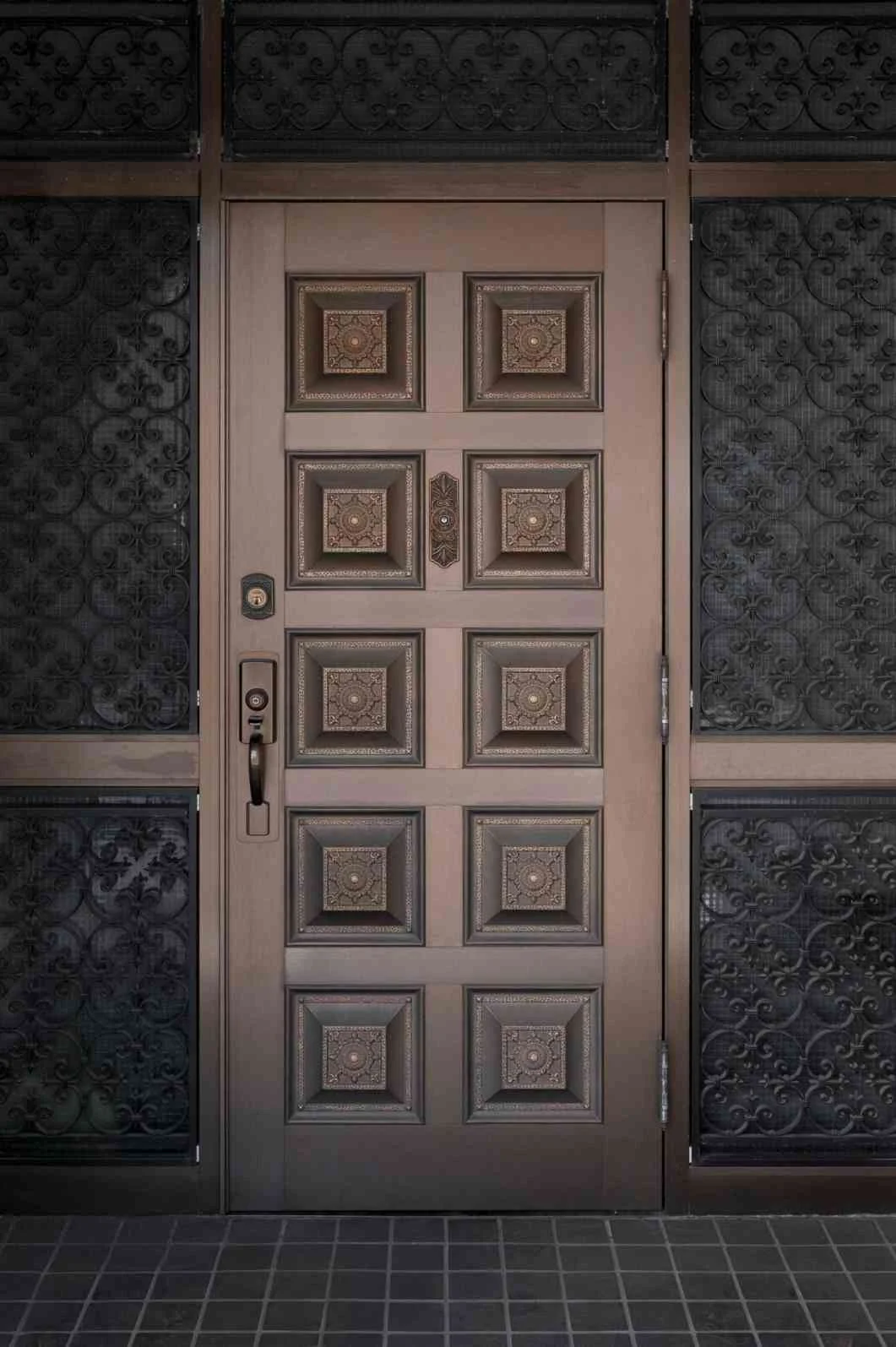

Explore 2026’s top luxury door design trends pivot doors, reclaimed teak, blackened steel, hidden smart tech & minimalist double entries redefining modern homes.
Spend any time around architecture and renovation projects and you notice a pattern. Weeks on the kitchen. Days on flooring. A whole separate argument about bathroom tile grout colour. The front door gets maybe an afternoon, usually toward the end when everyone’s tired and the budget’s been used up on other things.
That’s starting to change, and 2026 feels like a year where the shift has gotten more noticeable. The door is finally getting treated as a design decision rather than a construction requirement. Many homeowners are now exploring modern window and door design ideas for homes much earlier in the planning process.
Here’s what’s actually happening this year, written by someone who’s been visiting a lot of projects and talking to a lot of fabricators.
Pivot Doors Are Still the Biggest Statement You Can Make
Saying pivot doors are having a moment in 2026 feels slightly dishonest given they’ve been having a moment since around 2016. But there’s a reason to talk about them again and it’s not just because they look good in photographs, which they do.
The manufacturing has genuinely changed. Getting a pivot door above 2.5 metres five or six years ago meant finding a specialist, usually somewhere in Europe, waiting months, and spending accordingly. FritsJurgens and a few other studios have refined their systems to the point where doors of three metres or more are now within reach for projects that aren’t at the very top of the market. That matters.
What’s different about how they’re being used in 2026 is the material restraint. This preference for clean lines and minimal detailing aligns closely with current aluminum window design trends in contemporary architecture. For year,s the default was some combination of timber and glass. What’s coming through now is single-material approaches. A full concrete panel. A continuous piece of dark limestone. No hardware visible from the outside, or close to none. The door is the whole thing and nothing else in the frame is asking for attention alongside it.
I keep finding myself mentioning the counterweight thing to people who haven’t encountered it. You’re looking at a door that weighs somewhere between 250 and 400 kilos and it opens if you push it with two fingers. The pivot point is engineered to within a few grams of perfect balance. That gap between what the object looks like it should do and what it actually does is, I think, a large part of why these doors keep appearing on the best projects.
The Case for Concrete, Reclaimed Teak and Letting Things Age
Someone I know replaced their front door twice in about eight years. Panelled mahogany the first time, which was fine until it wasn’t. Aluminium composite the second time because it seemed like a smart update. That second door started looking wrong for the house fairly quickly, that particular shade of sleek-but-generic that dates in a way you don’t notice happening until it’s happened.
The third door is fibre-reinforced concrete over a timber core. When I asked about it recently the answer was something like “I genuinely don’t think about it.” For a front door that’s about as good an outcome as there is.
The push toward raw and natural materials in luxury door design comes from this same instinct. Similar material-focused thinking has influenced recent luxury door design trends across high-end residential projects. Concrete, stone veneer, reclaimed hardwoods. Materials that build character rather than decline from a peak. A walnut door oiled through a few winters looks better than it did when it was installed. Reclaimed teak has grain variation that means no two pieces are the same, partly because the wood was already doing something else for thirty years before it became a door.
White oak is the one that keeps coming up in conversations right now. Its understated appearance complements many of the finishes highlighted in aluminum door and window colors for modern homes. Quieter grain than walnut, which means it works with more minimal architecture without competing. It takes oil well and ages without drama.
The fair criticism of all of this is maintenance and it’s worth acknowledging honestly. Concrete needs sealing. Wood needs oiling. You’re trading low upkeep for materials that actually get more interesting over time, and that trade is only worth it if you’re prepared to do the upkeep. Some people are. Some aren’t. Knowing which category you’re in before choosing the material is probably a good idea.
Energy Efficient Window Installation in Pune: What Homeowners Should Know
Read this blog
Smart Technology That’s Chosen to Be Invisible
Before getting into this one: it’s not about Ring doorbells or Bluetooth keypads. Those exist, they serve a purpose, this is a different part of the conversation.
The interesting thing happening in higher-end residential work is that technology is being removed from view rather than added to it. Biometric readers built into the pull handle itself, not on a separate pad on the wall. You grip the handle, the print reads, the door opens. Allegion has been developing flush-integrated systems along these lines. The installation is involved and needs someone who knows what they’re doing, but the result is a door face with nothing on it that looks like a device.
Camera placement has moved to within the frame or the transom above. Lighting sensors in the threshold reveal rather than surface-mounted fixtures nearby. The logic is straightforward: a well-designed door shouldn’t announce that it’s connected to things.
One thing worth saying is that the full integrated approach is expensive and remains that way. But cleaner hardware at more accessible price points is genuinely more available now than it was a few years ago. Flush-mount lever handles that used to be specified only in commercial or hospitality contexts have trickled into residential ranges. Many of these hardware innovations first gained popularity in commercial aluminum doors and windows projects before moving into residential design. If the biometric setup is out of scope you can still benefit from hardware that doesn’t read as gadgetry.
Windows and Doors Vastu: Practical Tips for a Better Home
Read this blog
Blackened Steel: Still Not Done
The piece declaring blackened steel officially over as a material trend gets written every year or so. I’ve read a few versions of it. The material keeps turning up anyway, on projects from architects whose taste I respect, so at a certain point you have to conclude that the “it’s over” pieces are simply wrong.
The reason it keeps working is something like range. A blackened steel door frame in a white concrete interior reads a certain way. Material flexibility is one reason architects continue choosing aluminum doors and windows for both modern and industrial-inspired spaces. sharp and definite. The same frame in a warmer space with timber and natural textiles reads differently, more grounded than industrial. Not many material choices can shift registers like that. Most things you choose lock you into a direction. Blackened steel doesn’t, which is probably why people keep specifying it.
The thing that’s shifted in 2026 is the finishing conversation. Powder coat has been standard for years and it’s fine. But hand-blackened and oil-rubbed finishes are being asked for more often now. The difference is visible if you know to look for it. Powder coat has an evenness to it that reads slightly mechanical up close. Hand-finished steel has tiny variations in the surface, places where the oxidisation took differently, and those variations change how it looks across the day as the light angle shifts.
It’s more expensive and takes longer. Whether it’s worth it depends on how close people will get to the door and how much that matters to you. For a front door on a serious project I think it usually is.
Lighting That Lives Inside the Door
This application within luxury door design sounded wrong to me when I first came across it. Not lighting near the door or around the frame but actually within the door itself, part of the panel. It has an obvious failure mode where it looks exactly like the entrance to somewhere you’d pay a cover charge to get into.
Then I saw a project in Melbourne where a full-height pivot door had a thin resin panel backlit with a tunable LED array. Four millimetres or so. In daylight it read as a material, slightly translucent, with texture you noticed without quite identifying. After dark it glowed from the inside and the whole entry became a different kind of experience.
The practical version of this that’s more widely achievable is LED strips within the frame reveal or in a threshold detail at the base. These subtle details pair particularly well with contemporary aluminum windows and doors design concepts. Light that registers but doesn’t announce a source. Kengo Kuma has been exploring threshold light in architectural contexts for years and this is a natural extension of that thinking into residential entries.
Tunable colour temperature is worth building in if you’re going this route. Warmer in the evening, a bit cooler and brighter when people are arriving. The technology side of all this is fairly simple. Getting the conduit and junction boxes installed without any of it being visible is where the fabrication skill actually lies.
Large Double Entry Doors: Bigger Scale, Less Surface Detail
The shift happening with oversized double entry doors is counterintuitive and that’s partly why it’s worth noting. The doors are getting physically larger. The surface decoration is going in the opposite direction at the same time.
Double doors of this scale used to come with detail to match the ambition. Heavy mouldings. Raised panels. Ironwork. Visual complexity to help the door feel like it earned its size. What’s happening now is flush faces. Nothing on the surface. One long pull handle, sometimes running almost the full height. A lock mechanism that sits flush and is barely visible. The scale justifies itself and the surface stays quiet.
Leaves of around two metres per side are becoming less unusual even outside full custom fabrication, which has brought some costs down. The ceiling height requirement is still there and it’s real. You need the vertical to make the horizontal read the right way. Get that wrong and a very large door just looks wide and squat instead of grand, and there’s not much to be done about it once the opening is built.
Inside the house, the same oversized double door format is working well as a room divider in open-plan spaces. Similar space-dividing solutions are discussed in this guide to glass partitions, which are increasingly popular in open-plan layouts. Open, they fold back and you don’t register them. Closed, the room becomes something else. That kind of spatial flexibility is practically useful, not just photogenic.
Commissioning Rather Than Specifying
At a certain budget level, let’s say when the door alone is a five-figure line item, the conversation moves away from choosing from a range toward something more like directing a making process.
There are studios in Scandinavia and the UK working this way. The client isn’t selecting options from a sheet. They’re working with makers over months to develop surface treatments, embedded materials and hardware. Working with experienced manufacturers is often the first step, which is why researching the best aluminum windows and doors manufacturers can be valuable. that don’t have a catalogue reference because they’ve never existed before. A door face carved with reference to the landscape immediately around the property. A resin panel with plant material from a garden that means something to the family pressed into it. Patina work on bronze hardware developed across samples until it’s exactly right.
These take time. Six months from commission to installation is fairly typical with the better makers, sometimes longer. The result is a door that cannot exist anywhere else, which at that level is often the point.
What’s shifted in 2026 is that some studios previously working only at the very top of this market are taking on more accessible commissions. A bespoke handle design on an otherwise standard door. A surface treatment applied to a quality blank. Worth asking if it interests you even if you’re uncertain the budget is there. The conversation might go differently than expected.
Interior Doors Are Finally Getting Taken Seriously
Interior doors have historically been the thing chosen from the builders’ merchant after all the real decisions were made. Standard heights, standard widths, MDF core, paint grade finish, catalogue hardware. It works. Nobody ever called it exciting.
The better projects this year are treating interior doors as actual design decisions from the start of the brief. Doors finished to match the surrounding wall panel exactly, so what you see is a room rather than a series of door openings in a room. Fluted glass panels within doors that pass light between spaces. And the one that keeps coming back to me in projects I’ve seen recently: upholstered doors.
Leather or fabric over a solid core door in a bedroom or dressing room context does something to a room that’s hard to describe without standing in front of one. The room gets quieter. It feels more considered. It would be wrong in a hallway or anywhere high-traffic and that limitation is part of what makes it feel like a proper luxury detail rather than just a material upgrade.
Hardware on interior doors is something most renovation briefs don’t take seriously enough. Even premium doors benefit from thoughtful hardware selection, a topic often covered in guides about aluminum doors and windows benefits, features and applications. A well-chosen handle on an ordinary door blank will often do more work than a premium door with hardware picked in a hurry. Worth spending time on that decision before moving on.
conclusion
Some of what’s in this piece requires a full project. Pivot door installations, commissioned work, oversized openings, all of these need to be in the plan from the beginning because they affect structure and timeline.
Some of it doesn’t. Replacing existing hardware with something hand-finished and properly made is within most renovation budgets and makes a difference you notice immediately. A lighting detail in the frame reveal can often be retrofitted. Upholstered doors are achievable in most standard openings with the right person making them.
The underlying shift in 2026 is probably more important than any single trend in the list. Homeowners are researching products, materials, and a complete guide to Haimish Windows much earlier in the planning process than before. The door is getting taken seriously earlier in the process. That’s what produces the results worth looking at.

