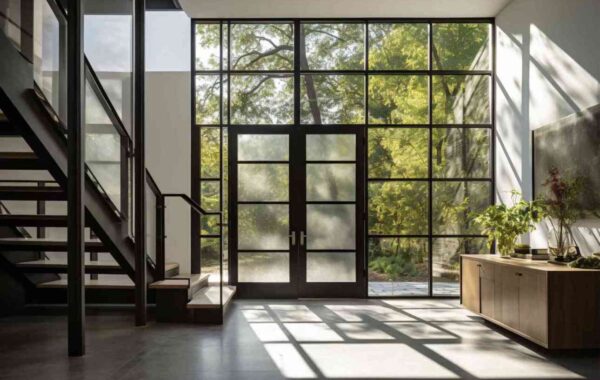

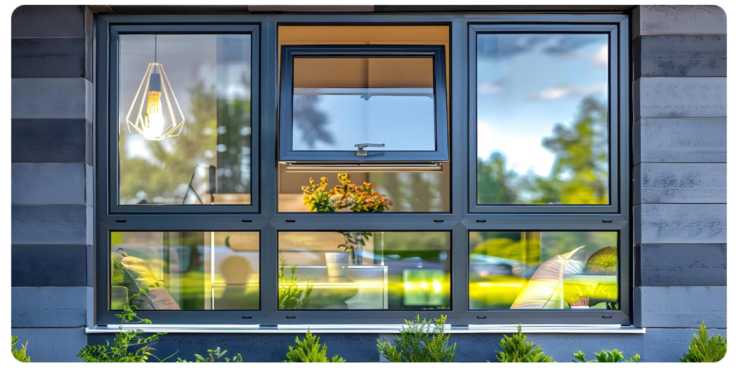

Across Pune from older bungalows in Aundh to new-construction apartments in Kharadi home owners are replacing their windows. Not because they have to. Because they’ve seen what modern aluminum window frames actually do for a home, and they want in.
This isn’t a trend driven by aesthetics alone. There are solid, practical reasons behind it. Lower electricity bills. Quieter rooms. Frames that don’t warp, rot, or need repainting every two years. And windows that still look sharp two decades from now.
At Haimish Windows, we’ve been manufacturing and fitting aluminum window frames in Pune since 1988. We’ve watched every material trend come and go and seen aluminum consistently come out on top when homeowners make an informed, long-term decision. Here’s exactly why that keeps happening.
1. They last and that changes how you calculate the real cost
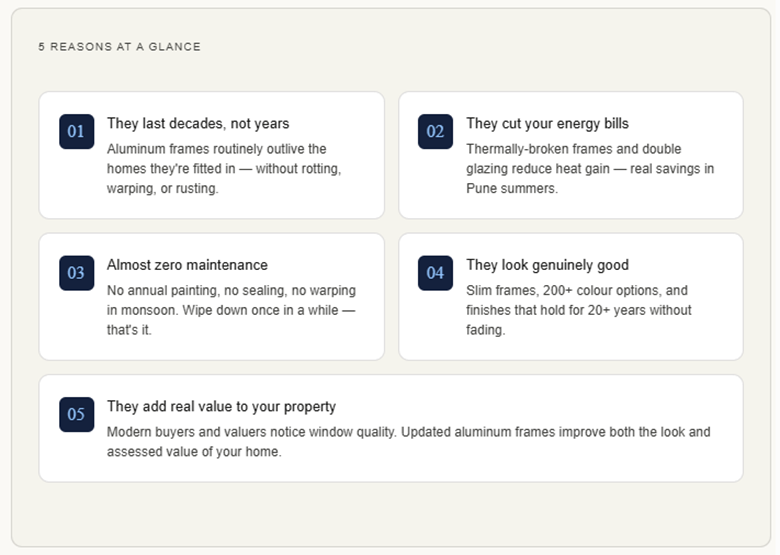
Most buying decisions around windows stop at the upfront price. That’s a mistake, because window frames are not like paint or flooring. They’re structural components that you’ll live with for decades. The right frame today means you’re not having this conversation again in twelve years.
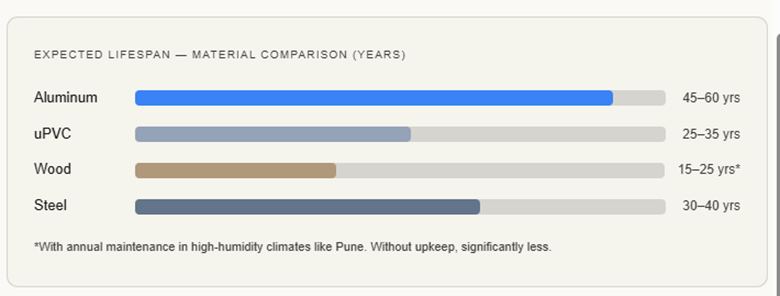
Wooden frames in Pune’s climate deteriorate faster than most homeowners expect. The combination of summer heat, monsoon humidity, and temperature swings causes wood to expand and contract repeatedly which leads to warping, swelling, and eventually broken seals. Once a wooden frame warps, the fix is replacement, not repair.
uPVC holds up better, but it becomes brittle over time with UV exposure common at Pune’s altitude and sun intensity. Color fades. Joints weaken. Large-span uPVC frames develop sag.
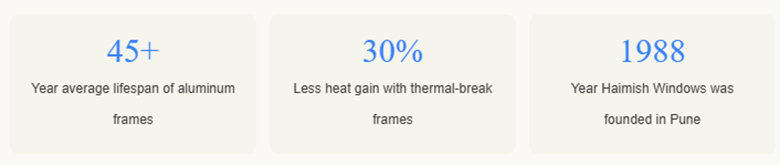
Aluminum doesn’t do any of this. The alloy grades used in quality window frames typically 6063 T5 don’t rust, don’t rot, don’t warp, and don’t fade if the powder coat was properly applied. A well-made aluminum frame in Pune should give you 45–60 years without structural issues.
2. Thermal-break frames genuinely reduce your electricity bill
This is the one most homeowners don’t know about until they’ve already bought standard frames and then regret not upgrading.
Standard aluminum conducts heat. That’s useful in some applications, but in a window frame, it means the frame itself becomes a thermal bridge: outdoor heat travels through the metal into your cooled room. In Pune’s April–June heat, you’re paying for air conditioning that’s actively fighting your window frames.
Thermally-broken aluminum window frames address this with a polyamide strip a non-conductive barrier inserted between the inner and outer sections of the frame. The two aluminum faces are no longer in direct metal contact, which significantly reduces the rate at which heat transfers through the frame.
Pair this with double glazing (two glass panes with a sealed air or argon gap between them) and you have a window assembly that’s doing real thermal work. The inner glass surface stays closer to room temperature which also reduces condensation on the glass during monsoon, a common problem in Pune apartments.
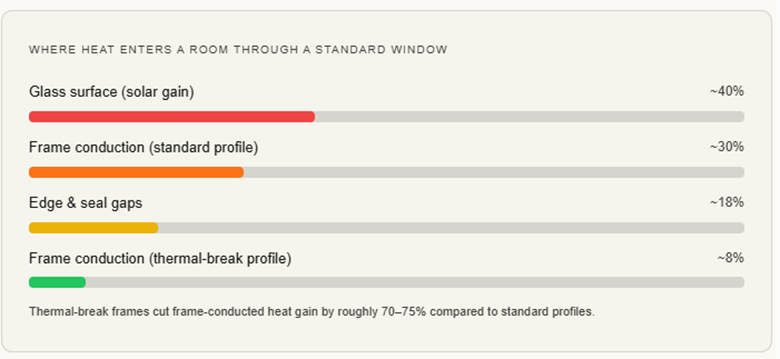
The money saved on air conditioning across a single Pune summer can offset a meaningful portion of the upgrade cost from standard to thermal-break frames.
Haimish Windows, Pune based on customer feedback across residential installations
3. The maintenance commitment is close to zero and that matters more than people think
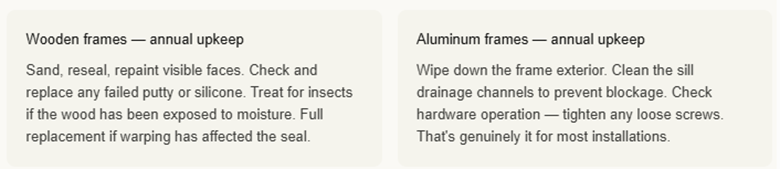
Wooden windows need annual attention. Sanding, sealing, repainting particularly where the frame meets the wall, where water can get in if the seal breaks. In a typical home with 10–14 windows, this is a full day’s work every year, plus material costs, plus the reality that most homeowners defer it until damage has already started.
uPVC requires less upkeep but the hardware hinges, handles, locking mechanisms tends to degrade faster than the frame itself. And once a uPVC frame gets structural stress cracks, the fix is a full replacement.
With quality aluminum window frames, the maintenance conversation is much shorter. The powder-coated finish doesn’t need repainting. The aluminum itself doesn’t rust or warp. The main task is wiping the frame and cleaning the drainage channels in the sill section twice a year which takes about 20 minutes per window if you’re being thorough.
4. The design options are genuinely broad and the finish lasts
The old objection to aluminum windows was that they looked industrial. Thin, silver, utilitarian. That was a fair criticism of frames manufactured 25 years ago. It isn’t fair anymore.
Modern aluminum window frames come powder-coated in the full RAL colour spectrum the same colour matching system used for architectural paints, automotive coatings, and high-end furniture. If your interior designer has specified a particular shade for your window frames, there’s almost certainly a RAL equivalent that can be powder-coated onto aluminum.
The practical difference between powder-coating and paint is adhesion and longevity. A quality powder coat is applied electrostatically and cured at high temperature it bonds to the aluminum at a molecular level rather than sitting on the surface. The result is a finish that resists chips, UV fading, and abrasion significantly better than painted wood or painted steel.
- Full RAL color range charcoal, sage, terracotta, bronze, white, black, and everything between
- Timber-effect anodized finishes that replicate the visual warmth of wood without the upkeep
- Dual-color options different finishes on interior and exterior faces of the same frame
- Matte, satin, and gloss finish levels available depending on the profile manufacturer
- Color consistency across all frames in a single installation important for visual coherence
The slim-profile aluminum systems now available allow frames as narrow as 25–35mm which means the glass takes up a far greater proportion of the window opening than traditional frames. The visual effect in a room is significant: more light, better views, and a contemporary look that works across modern, transitional, and even traditional home interiors.
5. They increase your property’s value and buyers notice
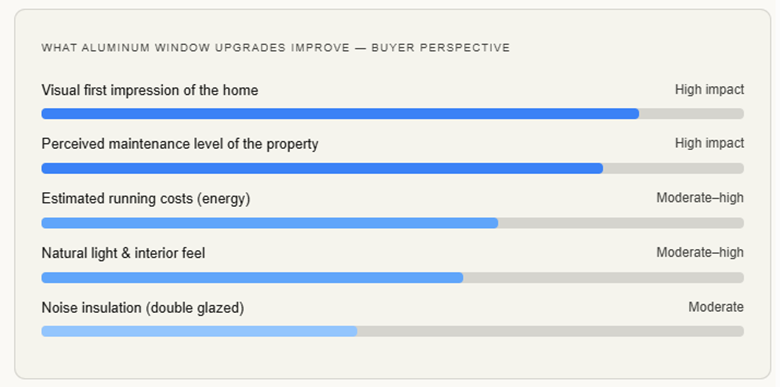
Windows are not invisible to buyers, valuers, or anyone who walks into a home. The condition, type, and quality of window frames communicate something about how a property has been maintained and modern aluminum window frames communicate it well.
In Pune’s residential market particularly in the premium and upper-mid segments updated aluminum window frames are increasingly the norm in new construction. That creates a reference point for resale: a home with original 20-year-old wooden windows beside a property with slim-frame, powder-coated aluminum systems looks dated in direct comparison, even if everything else is equivalent.
Beyond perception, there’s also a functional value argument. Energy-efficient window frames thermally-broken, double-glazed systems are increasingly relevant to buyers who are thinking about running costs, not just purchase price. In cities where power cuts still happen and electricity rates keep rising, a home that holds its temperature better is a more attractive home to own.
What to check before you choose your aluminum window frames
Not all aluminum frames are equal. The quality gap between a well-specified system and a cheap import is significant and it mostly shows up after a few monsoon cycles, not when the windows are brand new. Before finalizing any purchase:
- Ask for the alloy grade 6063 T5 or T6 is the benchmark. Don’t accept vague answers like “premium aluminum”
- Confirm whether the frame uses a thermal break ask to see the cross-section of the profile if needed
- Check the powder-coat thickness specification (minimum 60 microns for good UV and weather resistance)
- Ask about the hardware brand Roto, Siegenia, or Giesse are recognised quality benchmarks
- Clarify what the warranty covers and for how long a confident manufacturer backs their product specifically
- Ensure the sill section has adequate drainage channels for Pune’s monsoon rainfall levels