

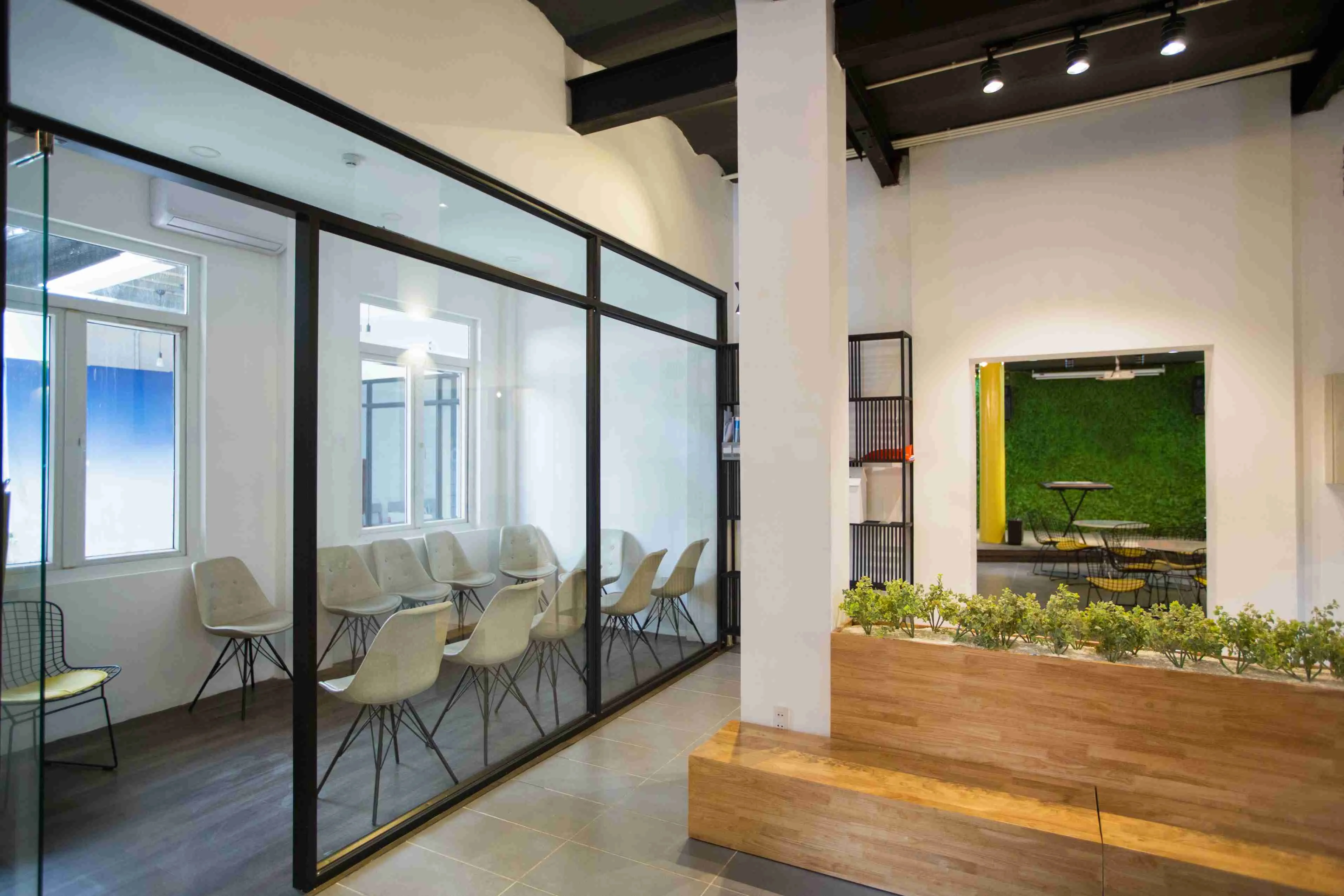

The look sells itself in the render. The acoustics conversation happens after move-in.
Modern interiors are moving away from heavy walls and enclosed rooms.
Whether it is an office, home, hotel, showroom or commercial space, there is a growing preference for interiors that feel open, bright and connected.
This is where frameless glass partitions can make a big difference.
Instead of using bulky aluminium or solid frames around every panel, frameless glass partitions use large glass sheets with minimal visible supporting elements. The result is a cleaner appearance while still allowing you to divide one space into separate areas.
But choosing frameless glass isn’t simply about selecting a clear glass panel.
The glass thickness, type, hardware, fixing method, privacy requirements and installation quality all matter.
Here’s what you should know before choosing a frameless glass partition.
What Are Frameless Glass Partitions?
Frameless glass partitions are interior dividing systems made primarily from glass panels with little or no visible framing around the main surfaces.
Unlike conventional framed partitions, where aluminium or other profiles are clearly visible, a frameless system focuses on creating an uninterrupted glass appearance.
The glass panels can be fixed using:
- Floor channels
- Ceiling channels
- Wall profiles
- Patch fittings
- Glass clamps
- Door fittings
- Silicone joints
The exact system depends on the size, location and design of the partition.
Why Are Frameless Glass Partitions Popular?
The biggest reason is visual openness.
A conventional wall divides two spaces completely.
A glass partition divides the space physically while allowing light and visibility to pass through.
This can make an interior feel:
- Larger
- Brighter
- More open
- Modern
- Less crowded
For offices, this can help maintain visual connection between teams.
For homes, it can separate spaces without making the interiors feel boxed in.
Benefits of Frameless Glass Partitions
More Natural Light
Glass allows daylight to travel between spaces.
This can be particularly useful in offices where internal rooms may otherwise depend heavily on artificial lighting.
A meeting room separated with glass can still receive light from the surrounding workspace.
Modern Appearance
Minimal framing gives frameless partitions a clean architectural appearance.
They can work particularly well with:
- Minimalist interiors
- Contemporary offices
- Luxury homes
- Modern retail stores
- Hotels
- Restaurants
Better Visual Connectivity
A glass partition separates spaces without completely disconnecting them.
For example, an office manager can have a private cabin while still maintaining a visual connection with the rest of the team.
Flexible Space Planning
Glass partitions can be used to divide larger spaces into smaller functional areas.
You can create:
- Meeting rooms
- Cabins
- Reception areas
- Conference rooms
- Workspaces
- Home offices
- Dressing areas
without constructing a permanent masonry wall.
Easy to Combine With Other Materials
Glass can work with:
- Wood
- Stone
- Aluminium
- Metal
- Concrete
- Fabric
- Wallpaper
This makes it relatively easy to integrate into existing interior designs.
Frameless Glass Partitions vs Framed Glass Partitions
The difference isn’t only visual.
| Feature | Frameless Glass Partitions | Framed Glass Partitions |
|---|---|---|
| Appearance | Minimal and seamless | More structured |
| Visible framing | Very little | More prominent |
| Natural light | Excellent | Excellent |
| Design | Premium/minimal | Versatile |
| Privacy options | Available | Available |
| Installation | Requires precision | Generally more forgiving |
| Cost | Often higher | Can be more economical |
| Best suited for | Premium interiors | Offices and commercial spaces |
A frameless system is generally chosen when the appearance of the glass itself is an important part of the design.
What Type of Glass Is Used?
The glass specification is one of the most important decisions.
Common options include:
- Toughened glass
- Laminated glass
- Toughened laminated glass
- Clear glass
- Frosted glass
- Acid-etched glass
- Tinted glass
- Low-iron glass
For interior partitions, toughened safety glass is commonly considered because of its strength and safety characteristics.
However, the appropriate glass should always be selected based on the specific application and applicable safety requirements.

Why Toughened Glass Is Commonly Used
Toughened glass is heat-treated to increase its strength compared with ordinary annealed glass.
When it breaks, it generally fractures into smaller pieces rather than large sharp shards.
This makes it suitable for many interior applications where safety is important.
However, toughened glass has an important characteristic:
Once it breaks, the panel loses its integrity.
For applications where maintaining a barrier after breakage is important, laminated glass may be considered.
Your existing Toughened Glass vs Laminated Glass article would be a very relevant internal link here.
Frameless Glass Partitions With Laminated Glass
Laminated glass consists of multiple glass layers bonded together with an interlayer.
If the glass cracks, the interlayer helps hold the pieces together.
This can provide additional post-breakage integrity.
Laminated glass can also offer acoustic benefits depending on the glass composition and interlayer used.
For areas where safety, sound control or security is particularly important, it may be worth considering.
Clear vs Frosted Frameless Glass Partitions
Clear glass is the most obvious choice when maximum transparency is desired.
But not every room needs complete visibility.
Frosted glass can provide a useful middle ground.
It allows light to pass through while reducing direct visibility.
This makes it useful for:
- Meeting rooms
- Bathrooms
- Bedrooms
- Doctor’s consultation rooms
- Private offices
- Dressing areas
You can also use partial frosting rather than frosting the entire panel.
For example, a clear glass partition with a frosted band at eye level can provide privacy without losing the feeling of openness.
French Windows and Bay Windows in Aluminium: A Complete Guide
Read this blog
Frameless Glass Partitions for Offices
Offices are one of the most common applications.
A large open office can be divided into separate areas without creating a visually heavy environment.
Frameless partitions can be used for:
- Manager cabins
- Meeting rooms
- Conference rooms
- Boardrooms
- Reception areas
- Private workspaces
They can also help create a more premium appearance for client-facing office areas.
Frameless Glass Partitions for Homes
The concept isn’t limited to commercial interiors.
In homes, frameless glass partitions can separate areas while keeping the interior visually connected.
They can be used between:
- Living room and dining area
- Kitchen and dining area
- Bedroom and dressing area
- Bathroom and bedroom
- Home office and living space
For smaller homes, this can be especially useful because solid walls can make already-limited spaces feel smaller.
Frameless Glass Partitions for Bathrooms
Frameless glass is particularly popular for shower enclosures.
It can create a cleaner bathroom appearance and make the shower area feel less enclosed.
Depending on the design, you can use:
- Fixed glass panels
- Hinged shower doors
- Sliding shower doors
- Walk-in shower screens
Your existing Sliding vs Hinged Shower Doors article would make a strong contextual internal link from this section.
Frameless Glass Partitions for Commercial Spaces
Hotels, restaurants, showrooms and retail environments can also benefit from frameless glass.
A glass partition can separate functional areas without hiding the interior from customers.
For example, a restaurant might use glass to separate:
- Dining area
- Private dining space
- Reception
- Waiting area
Similarly, a showroom can create separate display zones without visually closing them off.
How Much Privacy Do Frameless Glass Partitions Provide?
This depends entirely on the glass specification.
Clear glass provides very little visual privacy.
Frosted, etched or patterned glass can significantly increase privacy.
Other options include:
- Decorative films
- Gradient frosting
- Textured glass
- Tinted glass
- Switchable privacy glass
The right choice depends on whether you need complete privacy or simply want to reduce direct visibility.
Frameless Glass Partitions and Sound Insulation
One common misconception is that glass partitions automatically provide excellent soundproofing.
They don’t.
A single glass panel will not provide the same acoustic separation as a properly constructed solid wall.
However, acoustic performance can be improved with:
- Thicker glass
- Laminated acoustic glass
- Double-glazed configurations
- Proper seals
- Better door systems
- Carefully designed joints
For a conference room or executive cabin, acoustic requirements should be discussed before selecting the glass.
Are Frameless Glass Partitions Safe?
They can be, provided they are correctly designed, specified and installed.
Safety depends on more than the glass itself.
The complete system needs to consider:
- Glass type
- Glass thickness
- Panel size
- Edge conditions
- Hardware
- Fixings
- Door fittings
- Installation quality
Large glass panels should also be made visually noticeable where necessary to reduce the risk of people walking into them.
Manifestation bands, logos or decorative patterns can help.
Frameless Glass Partition Doors
A frameless partition can be combined with several door styles.
Hinged Glass Doors
These are suitable when you have enough swing space.
They can provide a clean and premium appearance.
Sliding Glass Doors
Sliding doors are useful where swing space is limited.
They can be particularly effective in offices and compact interiors.
Pivot Doors
Pivot systems can create a more architectural appearance and are suitable for larger openings when properly engineered.
The door hardware needs to be selected according to the glass weight and frequency of use.
Frameless Glass Partitions: Cost Factors
The price of a frameless glass partition depends on several factors.
The biggest variables include:
- Glass type
- Glass thickness
- Panel size
- Number of panels
- Door configuration
- Hardware
- Frosting or decorative treatment
- Installation
- Site conditions
A simple fixed clear-glass partition will naturally cost less than a premium system with laminated glass, custom hardware and multiple glass doors.
This is why comparing only a per-square-foot price can be misleading.
How to Compare Frameless Glass Partition Quotes
When you receive quotations from different suppliers, ask what is included.
Check:
- Glass type
- Glass thickness
- Glass brand
- Hardware
- Door fittings
- Channels or patch fittings
- Silicone
- Frosting
- Installation
- Transportation
- Warranty
Two quotations may have very different prices because they are specifying different products.
Always compare the complete specification rather than just the headline price.
Frameless Glass Partitions: Common Mistakes
Choosing Glass Only by Price
The cheapest glass isn’t necessarily the right glass for the application.
Ignoring Acoustic Requirements
If the room needs privacy for conversations, discuss acoustic performance before installation.
Using the Wrong Hardware
Large glass doors require hardware designed to carry their weight.
Forgetting Privacy
A completely clear meeting room may look great but may not provide enough privacy for actual use.
Poor Installation
Even excellent glass can perform poorly if the panels aren’t aligned and fixed correctly.
Not Planning the Door Swing
A hinged glass door requires adequate clearance.
If space is limited, a sliding system may be more practical.
How to Maintain Frameless Glass Partitions
Glass itself is relatively easy to clean.
For routine maintenance:
- Use a soft cloth
- Clean glass regularly
- Avoid abrasive cleaners
- Wipe water marks promptly
- Check hardware periodically
- Inspect silicone joints where applicable
Hardware deserves particular attention.
Handles, hinges, patch fittings and sliding mechanisms should be checked periodically, especially in high-use commercial environments.
Frameless Glass Partitions for Pune Homes and Offices
Pune has a growing mix of modern residential and commercial interiors, making frameless glass a natural fit for many contemporary projects.
For local projects, the design should still consider:
- Indoor humidity
- Air-conditioning
- Cleaning requirements
- Monsoon moisture
- Hardware quality
- Installation conditions
For exterior-facing applications, the specification needs to be different from a simple internal office partition.
How to Choose Frameless Glass Partitions
Before placing an order, answer these questions:
Where Will the Partition Be Installed?
An office meeting room has different requirements from a bathroom or home.
How Much Privacy Do You Need?
Choose clear, frosted, tinted or decorative glass accordingly.
Is Acoustic Privacy Important?
Consider laminated or double-glazed solutions where appropriate.
How Large Are the Panels?
Large panels require careful structural and hardware consideration.
Will There Be a Door?
Choose between hinged, sliding or pivot configurations based on available space.
What Is the Expected Usage?
A commercial meeting room used dozens of times per day needs different hardware considerations from a residential partition.
Frequently Asked Questions
What are frameless glass partitions?
Frameless glass partitions are interior dividing systems that use large glass panels with minimal visible framing to separate spaces while maintaining visual openness.
Are frameless glass partitions strong?
When correctly specified and installed using suitable safety glass, they can provide a strong and durable interior partition solution.
Are frameless glass partitions safe?
They can be safe when the correct glass, thickness, hardware, fixing method and installation are used for the application.
Can frameless glass partitions provide privacy?
Yes. Frosted, etched, tinted, patterned or switchable glass can be used when privacy is required.
Are frameless glass partitions suitable for offices?
Yes. They are particularly popular for cabins, meeting rooms, conference rooms and reception areas.
Can frameless glass partitions reduce noise?
They can provide some sound separation, but a single glass partition does not provide the same acoustic performance as a solid wall. Laminated acoustic glass, double glazing and proper sealing can improve performance.
Are frameless glass partitions expensive?
They can cost more than basic framed partitions because they often require larger glass panels, specialised hardware and more precise installation. The final cost depends on the complete specification.
Can frameless glass partitions be used in bathrooms?
Yes. They are commonly used for shower enclosures and bathroom partitions, provided the glass and hardware are suitable for the application.
Final Thoughts
Frameless glass partitions are a practical way to divide a space without making it feel closed off.
They can bring together natural light, visual openness and modern design while allowing different areas to serve different purposes.
But the best result doesn’t come from choosing the largest or clearest glass panel.
It comes from choosing the right combination of:
Glass + hardware + privacy + acoustics + installation.
For a home, office or commercial interior, take the time to decide how the partition will actually be used before selecting the final specification.
A well-designed frameless glass partition should look minimal, but there is a lot of engineering behind that minimal appearance.

