

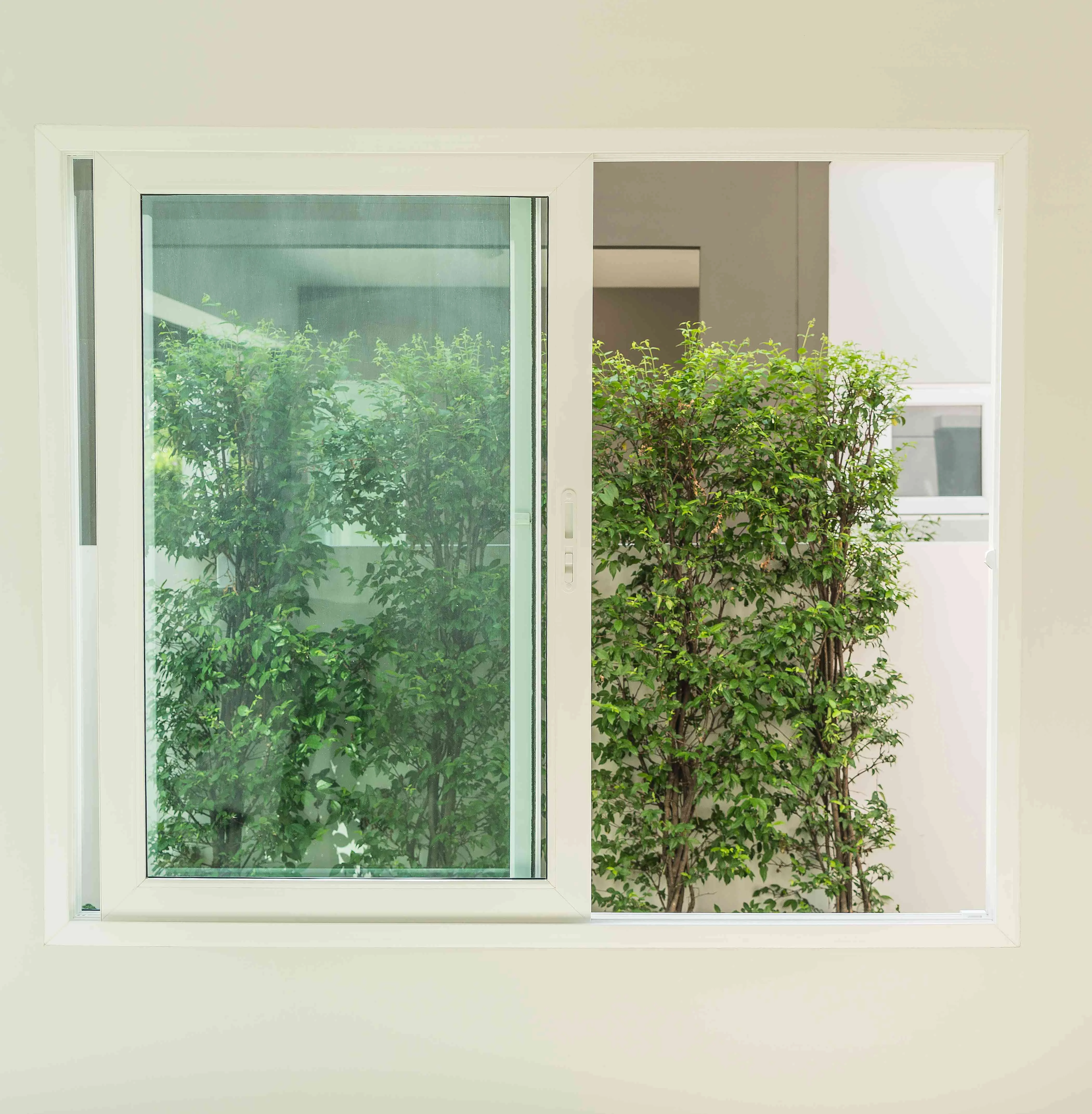

Choosing between uPVC casement vs sliding windows can seem like a small decision, but the type of opening you choose can affect ventilation, natural light, furniture placement and how easily you use the window every day.
Both styles have their advantages. Casement windows open outward using hinges, while sliding windows move horizontally along a track. The better choice depends less on which one is “best” and more on what your room actually needs.
If you’re selecting windows for a new home or replacing old ones in Pune, here’s what you should consider before making the decision.
What Are uPVC Casement Windows?
uPVC casement windows are hinged windows that open outward, usually from one side.
Because the sash opens away from the frame, you can create a relatively large opening for ventilation. They can also be configured as single, double or multiple-panel combinations depending on the size and design of the opening.
Casement windows are often a good fit for bedrooms, living rooms, kitchens and spaces where fresh-air circulation is important.
What Are uPVC Sliding Windows?
uPVC sliding windows have panels that move horizontally along a track. Instead of opening into the outside or inside, the sash slides behind or alongside another panel.
This makes them useful where you want an easy-to-operate window without an outward-opening sash.
Sliding windows are commonly considered for bedrooms, balconies, living areas and openings where space around the window needs to remain clear.
uPVC Casement vs Sliding Windows: Quick Comparison
| Feature | uPVC Casement Windows | uPVC Sliding Windows |
|---|---|---|
| Opening style | Hinged | Horizontal sliding |
| Ventilation | Excellent | Good |
| Opening area | Generally larger | Usually limited by sliding configuration |
| Operation | Handle-operated | Track and roller-operated |
| Space outside window | Requires opening clearance | No outward clearance required |
| Cleaning | Generally straightforward | Tracks need regular cleaning |
| Modern appearance | Clean and versatile | Simple and contemporary |
| Large openings | Good with suitable configuration | Good for wider openings |
| Best suited for | Ventilation-focused rooms | Space-conscious applications |
The exact performance will depend on the profile system, hardware, glass and installation.
uPVC Casement vs Sliding Windows for Ventilation
If ventilation is one of your main priorities, casement windows have an advantage because the sash can open widely.
You can direct more outside air into the room compared with a sliding window where part of the opening remains occupied by the fixed panel.
This can make casement windows particularly useful in bedrooms, kitchens and living spaces where natural ventilation is important.
Sliding windows can still provide good ventilation, but the effective open area is generally smaller.
Which Is Better for Natural Light?
Both styles can provide plenty of natural light.
What matters more is the overall frame design, number of panels, profile width and glass area.
If you want a clean, expansive glass appearance, a well-designed sliding system can work particularly well for wider openings. Casement windows, on the other hand, offer flexibility in how the opening is divided.
The key is to look at the glass-to-frame ratio, rather than choosing a window purely based on its opening mechanism.

Which Window Is Better for Small Rooms?
Sliding windows can be particularly convenient in smaller rooms because the panels don’t need clearance to swing outward.
You can place furniture, curtains or other elements closer to the window without worrying about an opening sash interfering with them.
Casement windows can still work well in compact spaces, especially where ventilation is more important than keeping the area around the window completely clear.
uPVC Casement vs Sliding Windows for Pune Homes
For Pune homes, your choice should consider more than appearance.
During summer, ventilation can help improve comfort, while during the monsoon, good sealing and drainage become important.
Casement windows can be attractive for rooms where you want maximum ventilation. Sliding windows can make sense where easy operation and space efficiency are higher priorities.
Whichever style you choose, profile quality, glazing, hardware, weather seals and installation have a major influence on how the window performs.
You can link this section naturally to your existing article:
How uPVC Windows Perform in Pune’s Monsoon
Which Is Easier to Clean?
Both types are relatively easy to maintain, but they have different cleaning requirements.
Casement windows generally have fewer horizontal tracks, making routine cleaning straightforward.
Sliding windows have tracks where dust, dirt and small debris can collect. Keeping these tracks clean helps the rollers move smoothly and reduces unnecessary wear.
For homes in dusty areas, regular track cleaning is especially useful for sliding windows.
Which Has Better Airtightness?
The airtightness of a window depends on the complete system rather than simply whether it is casement or sliding.
Casement windows can create a strong compression seal when properly closed because the sash presses against the frame.
Sliding windows use seals and brushes around the moving panels. The quality of the profile, seals, hardware and installation all affect the final result.
If reducing air leakage and improving weather sealing is a major priority, ask the supplier about the system’s actual performance specifications.
Which Is Better for Noise Reduction?
Neither window style should automatically be called “soundproof.”
Acoustic performance depends heavily on:
- Glass thickness
- Laminated or insulated glass
- Number of seals
- Frame design
- Installation
- Gaps around the window
For homes near busy roads or noisy areas, discuss the glass specification with your window supplier instead of choosing based only on the opening style.
You can link here to your existing Toughened Glass vs Laminated Glass article.
uPVC Profile Chambers Explained: What You Really Need to Know
Read this blog
Are Casement or Sliding Windows More Durable?
Both can provide long-term service when they are made with quality profiles and hardware and installed correctly.
Casement windows rely on hinges, handles and locking points. Sliding windows depend heavily on rollers and tracks.
This means maintenance is slightly different for each system. With sliding windows, keeping the track clean and checking the rollers is particularly important.
With casement windows, hinges and hardware should be inspected periodically.
Which Is More Cost-Effective?
The final price depends on much more than the opening style.
Your quotation can change based on:
- Window size
- Profile system
- Number of panels
- Glass type
- Hardware
- Colour or finish
- Reinforcement
- Installation
- Project quantity
So it isn’t accurate to say that casement windows are always cheaper or sliding windows are always cheaper.
The better approach is to compare two quotations with the same glass, profile quality, hardware and installation scope.
When Should You Choose uPVC Casement Windows?
Casement windows may be the better choice if you:
- Prioritise ventilation
- Want a larger opening area
- Prefer hinged windows
- Want strong compression sealing
- Need flexible opening configurations
- Have sufficient clearance outside the window
When Should You Choose uPVC Sliding Windows?
Sliding windows may be a better fit if you:
- Have limited space around the opening
- Don’t want an outward-opening sash
- Prefer horizontal operation
- Have wider openings
- Want furniture positioned close to the window
- Prefer a simple sliding design
uPVC Casement vs Sliding Windows: Which Is Better?
There is no universal winner in the uPVC casement vs sliding windows comparison.
Choose casement if ventilation and a larger opening are your priorities.
Choose sliding if space efficiency and easy horizontal operation are more important.
For a home in Pune, also consider the room’s orientation, available space, noise levels, ventilation requirements and exposure to sun and rain.
Most importantly, compare the complete window system—not just the style.
Frequently Asked Questions
Are uPVC casement windows better than sliding windows?
Casement windows can be better when ventilation and a larger opening are priorities. Sliding windows can be more convenient where space around the window is limited.
Which provides better ventilation, casement or sliding windows?
Casement windows generally provide a larger effective opening, so they can offer better ventilation when fully opened.
Are uPVC sliding windows good for bedrooms?
Yes. Sliding windows can work well in bedrooms where easy operation and space efficiency are important.
Which is easier to maintain?
Both are relatively easy to maintain. Sliding windows require particular attention to tracks and rollers, while casement windows require periodic checking of hinges and hardware.
Are uPVC casement windows more expensive than sliding windows?
Not necessarily. The final cost depends on the profile, glass, hardware, size, configuration, finish and installation.
Which is better for Pune’s monsoon?
Both can work well when properly specified and installed. Good drainage, weather seals, profile quality and installation are particularly important during the monsoon.
Can I use double glazing with uPVC casement and sliding windows?
Double glazing can be available with both systems, depending on the profile and glazing configuration. The suitable glass specification should be selected based on the project’s thermal, acoustic and structural requirements.

