

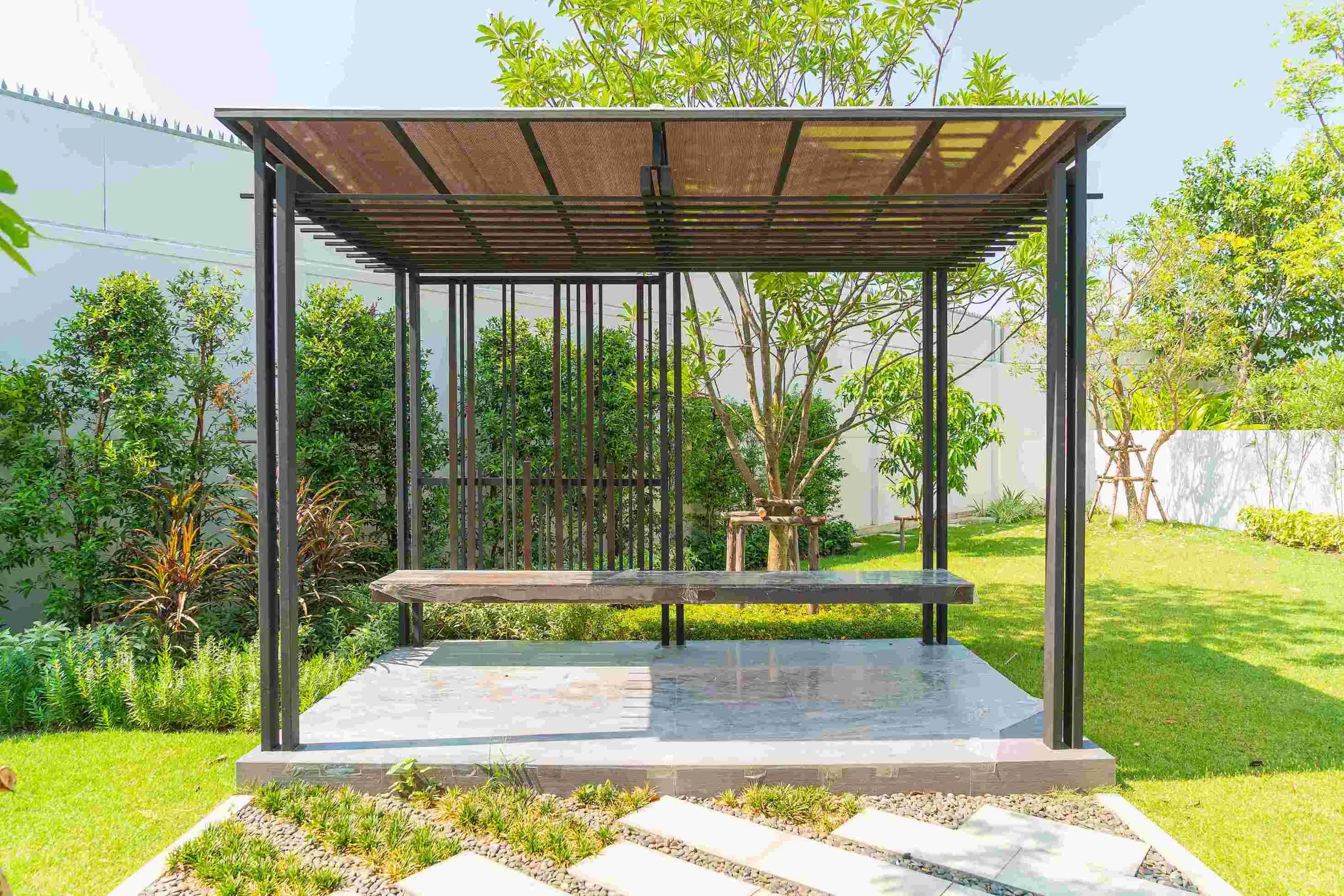

One folds away the moment weather turns. The other stands there and takes whatever comes, by design.
An outdoor balcony or terrace can be one of the best parts of a home, especially when you have enough space to sit outside, entertain guests or simply enjoy some fresh air.
But Indian weather can make outdoor spaces difficult to use throughout the year.
Strong summer sunlight can make a terrace uncomfortable. Monsoon rain can suddenly force everyone indoors. And on a windy day, an ordinary fabric awning may not be the best solution.
This is where retractable awnings and pergolas come into the picture.
Both can provide shade and make an outdoor area more comfortable, but they solve slightly different problems.
A retractable awning is generally lighter, more flexible and easier to install. A pergola is a more substantial structure designed to become a longer-term part of the outdoor space.
So which one should you choose?
The answer depends on your space, weather exposure, budget, frequency of use and how much protection you expect from the system.
Retractable Awnings vs Pergolas: Quick Comparison
| Feature | Retractable Awning | Pergola |
|---|---|---|
| Initial cost | Lower | Higher |
| Structure | Lightweight | Permanent/structural |
| Shade | Excellent | Excellent |
| Rain protection | Limited to moderate | Better, especially with louvers |
| Wind resistance | More limited | Generally better |
| Flexibility | Very high | High |
| Maintenance | Fabric and mechanism | Frame and mechanism |
| Lifespan | Typically shorter | Typically longer |
| Best for | Balconies and patios | Terraces and outdoor living areas |
The actual performance and cost depend on the system specification, materials, dimensions, installation and site conditions.
What Is a Retractable Awning?
A retractable awning is a fabric shade system that extends over an outdoor area when you need protection from the sun and retracts when you want the space to remain open.
The fabric is generally supported by folding arms and can be operated manually or with a motor.
Some systems can also include weather sensors that automatically retract the awning when strong wind or rain is detected.
Retractable awnings can work particularly well for:
- Balconies
- Patios
- Café seating areas
- Small terraces
- Outdoor dining areas
- Residential windows
- Garden seating
The main advantage is flexibility.
When you want shade, extend the awning.
When you want an open view, retract it.
What Are the Advantages of Retractable Awnings?
Flexible Shade
One of the biggest advantages is that you don’t have to keep the entire outdoor area permanently covered.
You can control how much shade you need depending on the time of day.
Lower Initial Investment
Retractable awnings generally cost less than a full aluminium pergola, particularly for smaller areas.
The current Haimish article gives an indicative range of around ₹450–₹900 per sq. ft., depending on the cassette type and motorisation. Treat this as a project-specific indication rather than a fixed market price.
Suitable for Balconies
If you have a balcony where the primary requirement is protection from strong sunlight, an awning can be a practical solution without creating a heavy permanent structure.
Motorised Operation
Motorisation makes larger awnings easier to operate.
You can also integrate certain systems with weather sensors, allowing the awning to retract automatically when conditions become unsuitable.
What Is a Cassette Retractable Awning?
A cassette awning includes a protective housing that encloses the fabric when the awning is retracted.
This is useful because the fabric is protected from:
- Dust
- Sunlight
- Rain
- Pollution
- General outdoor exposure
An open or semi-cassette system leaves some of the fabric exposed even when retracted.
That can reduce the upfront cost, but the exposed fabric may experience more weathering over time.
For a balcony or terrace that receives strong sunlight and dust, a cassette system can therefore be worth considering.
Manual vs Motorised Retractable Awnings
A manual awning uses a crank to extend and retract the fabric.
It’s simple and generally costs less.
A motorised awning uses an electric motor, allowing you to operate it using a switch, remote or compatible automation system.
For a small residential balcony, manual operation may be completely adequate.
For a large terrace or commercial outdoor seating area, motorisation becomes more attractive because of the size and frequency of operation.

Are Retractable Awnings Good for Monsoon Rain?
This is where expectations need to be realistic.
A retractable awning can provide some protection from light rain, but it shouldn’t automatically be treated as a replacement for a proper roof.
Wind is also an important consideration.
An extended fabric awning can experience significant loads during strong gusts. That’s why retracting the awning during severe weather is important.
For homes or commercial spaces with significant wind exposure, a motorised system with a wind sensor can provide an additional level of protection.
What Is a Pergola?
A pergola is a more substantial outdoor structure designed to provide shade and define an outdoor living area.
Modern pergolas are often made from aluminium and can have either fixed roof elements or adjustable louvres.
Unlike a simple retractable awning, a pergola becomes a more permanent part of the property.
This makes it particularly suitable for:
- Large terraces
- Rooftops
- Outdoor living areas
- Poolside spaces
- Restaurants
- Cafés
- Villas
- Garden seating areas
Fixed Roof Pergolas
A fixed-louvre or fixed-roof pergola provides a permanent structure over the outdoor area.
It can create filtered shade and give the terrace a defined architectural appearance.
However, a conventional open-louvre pergola does not necessarily provide complete rain protection.
Rain can still pass through the openings.
If rain protection is a priority, an adjustable louvred pergola is generally the more appropriate option.
What Is a Louvered Pergola?
A louvered pergola uses adjustable aluminium slats that can rotate.
When the louvers are open, you get:
- Airflow
- Natural light
- Open-sky views
When they are closed, the roof provides significantly greater protection from rain and sunlight.
This makes louvered pergolas particularly interesting for terraces where the homeowner wants to use the outdoor area in different weather conditions.
What Is a Bioclimatic Pergola?
A bioclimatic pergola is a more advanced type of louvered pergola designed to respond to changing environmental conditions.
Depending on the system, it can incorporate:
- Adjustable louvers
- Rain sensors
- Wind sensors
- Integrated lighting
- Heating
- Drainage channels
- Motorised controls
The idea is to make the outdoor space more comfortable by controlling sunlight, airflow and rain.
These systems sit at the premium end of the market, so they make the most sense when the outdoor area is used frequently.
Retractable Awnings and Pergolas: Which Is Better for a Balcony?
For a typical balcony, a retractable awning can be the more practical choice.
You may not need a substantial permanent structure if your main objective is simply to reduce direct sunlight.
An awning also takes up less visual space and can be retracted when you want an open balcony.
A pergola becomes more attractive when the balcony is unusually large, structurally suitable and intended to function as a proper outdoor living area.
Which Is Better for a Large Terrace?
For a large terrace, the answer can change.
If you want the space to function as an outdoor room, a pergola can offer much more than shade.
It can provide a defined structure for:
- Outdoor furniture
- Lighting
- Heating
- Dining
- Entertainment
- Plants
- Privacy screens
A louvered pergola can also provide better rain protection than a conventional fabric awning.
Retractable Mosquito Screens vs Fixed Mesh: Which Is Better for Your Home?
Read this blog
Retractable Awnings and Pergolas for Pune Weather
Pune’s weather presents a combination of strong sunlight, summer heat, monsoon rainfall and occasional strong winds.
That means the right outdoor shading system needs to be selected according to the location.
A sheltered balcony may work perfectly well with a retractable awning.
A high-rise terrace exposed to strong wind may require a more carefully engineered solution.
A large terrace that needs to remain usable during the monsoon may benefit from a louvered pergola.
The important point is that there is no single outdoor shading system that works equally well for every property.
A Real Example: A High-Rise Terrace in NIBM Road
Consider a rooftop terrace on a high-rise property in NIBM Road.
The homeowner initially wanted a basic retractable awning because it was more affordable than installing a full pergola.
The problem was the height.
At the twelfth floor, wind exposure was significantly greater than it would have been on a ground-floor patio.
Instead of installing a basic manually operated awning across the entire terrace, the solution was to use a motorised cassette awning with a wind sensor for the seating area.
A smaller louvered pergola was then used in the section where rain protection was more important.
This approach avoided spending the full budget on a pergola while still addressing the property’s actual weather exposure. The project is described in the existing Haimish article.
The lesson is simple:
Don’t choose an outdoor shading system based only on the size of the space. Consider the environment around it.
Retractable Awning vs Pergola: Maintenance
Maintenance is another important difference.
Retractable Awning Maintenance
An awning requires attention to:
- Fabric
- Folding arms
- Motor
- Mounting brackets
- Sensors
- Moving components
The fabric is particularly important because prolonged exposure to sunlight and weather eventually causes fading and material degradation.
The existing Haimish article estimates an awning fabric life of roughly 7–10 years, depending on exposure and care.
Pergola Maintenance
Aluminium pergolas generally require less fabric-related maintenance because the structure itself is more permanent.
Louvered systems still contain moving components, so the mechanisms should be inspected and serviced periodically.
Drainage channels should also be kept clean.
How Long Do Retractable Awnings Last?
The lifespan depends on the fabric quality, frame, installation, weather exposure and frequency of use.
The fabric is normally the component that shows the most visible ageing.
UV exposure can cause:
- Fading
- Stiffening
- Surface deterioration
- Reduced appearance
This doesn’t necessarily mean the entire awning needs to be replaced.
In many systems, the fabric can be replaced while retaining the existing frame and mechanism, depending on the product design.
How Long Does an Aluminium Pergola Last?
A well-designed aluminium pergola can have a significantly longer service life than a fabric awning.
The existing Haimish article estimates approximately 20–25 years for a well-built aluminium pergola, subject to proper maintenance and system quality.
This longer lifespan is one reason a pergola can make more sense when you plan to use the outdoor space for many years.
Retractable Awnings vs Pergolas: Cost
Initial price is one of the biggest differences between the two.
Retractable awnings generally have a lower entry cost.
Pergolas require more aluminium, structural components and installation work, so the initial investment is higher.
However, you shouldn’t compare them purely on installation price.
Consider the total ownership cost.
For example:
Awning: Lower initial cost + eventual fabric replacement
Pergola: Higher initial cost + potentially longer service life
The better financial decision depends on how long you plan to use the property and how heavily the outdoor space will be used.
Which Is Better for Rain Protection?
If rain protection is the priority, a louvered pergola is generally the stronger option.
A retractable awning is primarily a shade system.
A louvered pergola can close its roof and direct rainwater toward integrated drainage channels, depending on the design.
For areas that need to remain usable during monsoon conditions, this distinction is important.
Which Is Better for Windy Locations?
Wind exposure needs to be considered carefully.
Retractable fabric awnings should generally be retracted when strong winds are expected.
A wind sensor can help automate this process.
Pergolas are more substantial structures, but that does not mean every pergola is suitable for every wind condition.
The structure, fixings and engineering need to be appropriate for the specific site.
High-rise terraces deserve particular attention because wind loads can be significantly higher than at ground level.
Retractable Awnings and Pergolas for Restaurants
The decision is slightly different for commercial properties.
A restaurant may operate its outdoor seating every day and depend on that space for revenue.
In that situation, durability and reliability become more important than simply finding the lowest initial price.
A motorised pergola can provide:
- Better weather flexibility
- Automated operation
- More reliable daily use
- Integrated lighting options
- Better rain protection
For a small café with occasional outdoor seating, however, a retractable awning may still provide excellent value.
How to Choose the Right System
Before choosing between a retractable awning and pergola, consider these questions:
How Often Will You Use the Space?
Occasional use may favour an awning.
Daily use may justify a pergola.
How Much Rain Protection Do You Need?
For shade only, an awning may be sufficient.
For significant monsoon protection, consider a louvered pergola.
How Exposed Is the Space to Wind?
A sheltered balcony is very different from a twelfth-floor terrace.
What Is Your Budget?
Awnings generally have a lower initial cost.
Pergolas require a larger upfront investment.
How Long Do You Plan to Stay?
If you’re planning to use the system for decades, long-term durability becomes more important.
Do You Want Automation?
Motorisation and weather sensors can add convenience and protection, particularly for larger installations.
Common Mistakes to Avoid
Choosing Only Based on Price
The cheapest system may not be the best value over ten or twenty years.
Ignoring Wind Exposure
This is particularly important for high-rise balconies and terraces.
Treating an Awning Like a Permanent Roof
Retractable awnings are primarily designed for shade and limited weather protection.
Forgetting Drainage
Any system intended to protect against rain needs an appropriate water-management strategy.
Not Considering Maintenance
Fabric replacement, motor servicing and mechanism maintenance should be part of your long-term budget.
Choosing the Wrong System for the Space
A small balcony and a large rooftop terrace have very different requirements.
Frequently Asked Questions
Are retractable awnings better than pergolas?
Neither is universally better. Retractable awnings are generally better for flexible shade and smaller outdoor areas, while pergolas are better suited to larger spaces that need a more permanent structure and greater weather protection.
Which is cheaper, an awning or pergola?
Retractable awnings generally cost less initially. Pergolas require a larger investment because they involve a more substantial structure and installation.
Are retractable awnings suitable for Pune?
Yes, particularly for balconies and patios where shade is the primary requirement. However, wind exposure and monsoon conditions should be considered when selecting the system.
Can a retractable awning protect against rain?
It can provide protection from light rain depending on the fabric and installation, but it should not automatically be treated as a waterproof permanent roof.
Is a louvered pergola waterproof?
When the louvers are fully closed and the system is correctly designed, sealed and drained, a louvered pergola can provide effective rain protection.
How long does an awning last?
The frame and mechanism can last for many years, while the fabric may eventually need replacement because of UV exposure and general weathering. The actual lifespan depends on the material, quality, usage and maintenance.
How long does an aluminium pergola last?
A properly designed and maintained aluminium pergola can have a long service life. Haimish currently estimates around 20–25 years for a well-built system.
Final Verdict
When comparing retractable awnings and pergolas, the right choice depends on what you want your outdoor space to become.
If you mainly want shade, flexibility and a lower initial investment, a retractable awning can be an excellent solution.
If you want to turn a terrace into a genuine extension of your living space, with better rain protection and a longer-term structure, a louvered aluminium pergola may be worth the additional investment.
For Pune homes, the decision should also take into account summer heat, monsoon rain, wind exposure and the location of the property.

