



A large opening can completely change the feel of a room. It can bring in more daylight, improve the view and make a living space feel connected to a balcony, garden or terrace.
This is where aluminium sliding doors can be a practical choice.
Instead of swinging into the room like a conventional hinged door, sliding doors move horizontally along a track. This makes them particularly useful where you want a large glazed opening without losing floor space.
For modern homes, villas, apartments and commercial spaces in Pune, aluminium sliding doors offer a combination of slim profiles, large glass areas and convenient everyday operation.
But choosing the right sliding door isn’t simply about picking a frame colour. The aluminium profile, glass, rollers, locks, drainage and installation all contribute to how the door performs.
What Are Aluminium Sliding Doors?
Aluminium sliding doors consist of one or more panels that move horizontally along a track.
Depending on the configuration, one panel may slide behind another, allowing part of the opening to remain accessible.
Some systems can accommodate larger panels and wider openings, making them suitable for spaces where homeowners want a stronger visual connection with the outdoors.
The main components include:
- Aluminium profiles
- Glass panels
- Sliding tracks
- Rollers
- Handles
- Locking hardware
- Seals
- Drainage channels
Each component has a role to play in the overall performance of the door.
Why Choose Aluminium Sliding Doors?
The biggest advantage is the combination of large glass areas and a space-saving opening mechanism.
When you open a sliding door, the panel moves sideways rather than swinging into the room or outside.
This can be particularly useful for:
- Balconies
- Living rooms
- Terraces
- Gardens
- Patios
- Bedrooms
- Dining areas
- Commercial spaces
Aluminium also allows manufacturers to create strong frames with relatively slim visible sections, depending on the selected system.
Aluminium Sliding Doors for Modern Homes
A sliding door can do more than provide access.
When used between a living room and balcony, for example, it can make the two areas feel visually connected even when the door is closed.
For homes with gardens or terraces, large glazed sliding doors can also help bring outdoor views into the interior.
This is why they are frequently considered in contemporary residential designs where natural light and open views are important.
Aluminium Sliding Doors for Balconies
Balcony openings are one of the most common applications for sliding doors.
They allow homeowners to access the balcony without requiring additional floor space for a swinging door.
For Pune apartments, the door specification should also take into account:
- Monsoon rain
- Wind exposure
- Sunlight
- Dust
- Drainage
- Glass safety
- Security
A balcony door exposed to heavy rain should have suitable drainage and sealing rather than relying on the glass and frame alone.
uPVC vs Aluminium Windows in Pune: Which Option Is Right for Your Home?
Read this blog
Aluminium Sliding Doors for Living Rooms
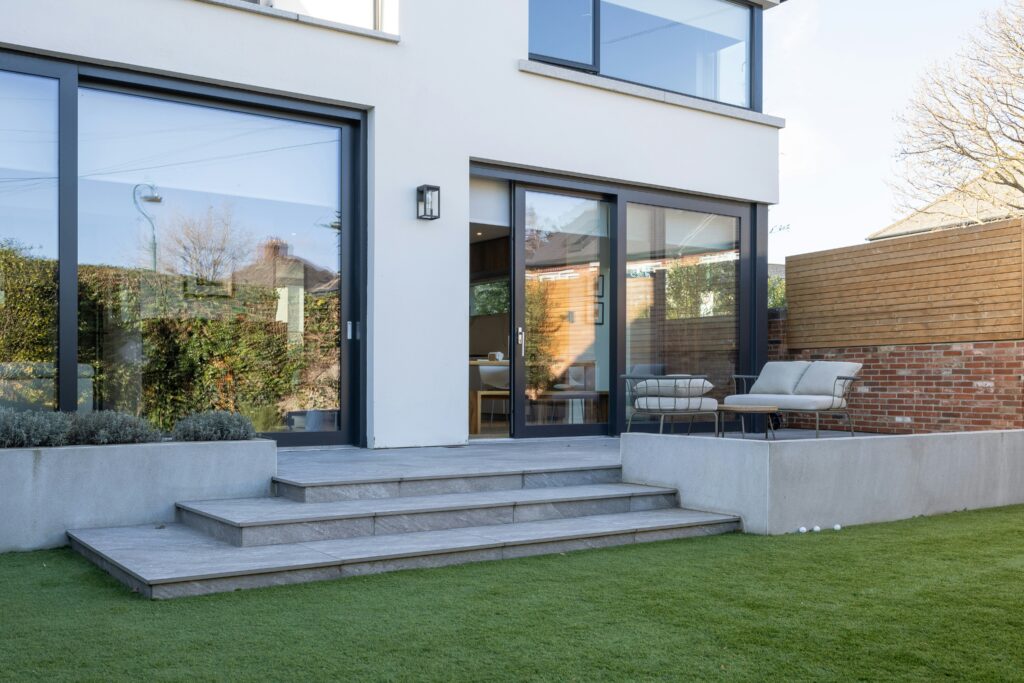
A large living-room sliding door can create a strong connection between the interior and exterior.
Imagine a living room opening onto a landscaped garden. With the doors closed, you still have the view and natural light. When the weather is comfortable, the panels can slide open and create a wider connection.
For larger openings, homeowners can consider multi-panel configurations depending on the selected system.
What Are the Benefits of Aluminium Sliding Doors?
Space-Saving Design
Because the panels slide sideways, you don’t need the clear floor area required by a conventional hinged door.
Large Glass Areas
Sliding systems can provide generous glazed openings, helping bring more daylight and outdoor views into the room.
Modern Appearance
Aluminium frames can create a clean architectural appearance that works well with contemporary homes.
Flexible Configurations
The number and arrangement of panels can be selected according to the opening and the chosen system.
Easy Everyday Operation
A well-made sliding door should move smoothly along its track without requiring excessive force.
Low Routine Maintenance
Aluminium doesn’t require regular painting like many timber door finishes. Basic cleaning and periodic hardware checks are usually sufficient.
What Glass Is Best for Aluminium Sliding Doors?
The glass should be selected according to the location and requirements of the door.
Toughened Glass
Toughened glass can be considered where safety and impact resistance are important.
Laminated Glass
Laminated glass can provide additional safety and can also be useful where acoustic performance is a priority.
Double Glazing
Where the aluminium system supports it, double glazing can improve thermal and acoustic performance compared with basic single glazing.
Solar-Control Glass
For large openings exposed to strong sunlight, solar-control glass can help manage solar heat entering the room.
The best glass isn’t necessarily the most expensive option. It should match the orientation, size and purpose of the opening.
You can internally link this section to your existing Toughened Glass vs Laminated Glass and Double Glazed Windows articles.
Best Aluminium Windows and Doors Manufacturers in Pune: A Practical Guide
Read this blog
Are Aluminium Sliding Doors Good for Pune’s Climate?
Yes, when they are properly specified and installed.
Pune homes have to deal with hot summer conditions as well as seasonal monsoon rain. Large glazed openings therefore need to be planned with both heat and water management in mind.
For sunny rooms, the glass specification can make a noticeable difference.
For external openings, the frame should have appropriate drainage and sealing.
And during installation, the frame needs to be correctly aligned so that the sliding panels and seals work as intended.
Aluminium Sliding Doors vs uPVC Sliding Doors
Both materials can be suitable for sliding door systems, but they offer different characteristics.
| Feature | Aluminium Sliding Doors | uPVC Sliding Doors |
|---|---|---|
| Frame strength | High | Good |
| Profile appearance | Slim modern options | Generally more substantial |
| Large openings | Well suited to many applications | Depends on system |
| Thermal insulation | Depends on system; thermal-break options available | Naturally good |
| Maintenance | Low | Low |
| Design flexibility | High | High |
| Suitable for modern architecture | Yes | Yes |
The right choice depends on the size of the opening, thermal requirements, design preference and budget.
You can also link to your existing uPVC vs Aluminium vs Wood article here.
Aluminium Sliding Doors vs Aluminium Folding Doors
These two systems are often compared because both can create large openings.
With a sliding door, the panels move horizontally and usually overlap each other.
With a folding door, the panels fold together and stack to one side or both sides.
If you want a cleaner large-glass appearance and don’t necessarily need the entire opening cleared, sliding doors can be a good option.
If your priority is creating a very wide open passage, folding doors may be worth considering.
Your Aluminium Folding Doors article can be linked naturally from this section.
How Secure Are Aluminium Sliding Doors?
Security depends on the complete door system.
Important factors include:
- Locking mechanism
- Number of locking points
- Glass type
- Frame design
- Roller quality
- Handle quality
- Installation
For ground-floor homes and easily accessible balconies, security should be discussed during the design stage.
Don’t assume that every aluminium sliding door has the same security performance.
Do Aluminium Sliding Doors Reduce Noise?
They can help reduce outside noise, but performance depends heavily on the glass and sealing.
A basic single-glazed sliding door will provide a different level of acoustic performance from a properly sealed system using suitable laminated or double glazing.
If your home is near a busy road, school, commercial area or construction site, discuss acoustic requirements before choosing the glass.
Are Aluminium Sliding Doors Energy Efficient?
The answer depends on the complete system.
Aluminium itself conducts heat, so the profile design matters.
Some modern aluminium systems use thermal breaks to reduce heat transfer through the frame.
The glass is equally important. Double glazing and suitable solar-control glass can improve the overall thermal performance of a large glazed opening.
For a Pune home, consider the direction of the opening and the amount of direct sunlight before selecting the final specification.
How Much Do Aluminium Sliding Doors Cost in Pune?
There isn’t one fixed price for aluminium sliding doors.
The final cost can vary depending on:
- Door dimensions
- Aluminium profile system
- Glass type
- Glass thickness
- Number of panels
- Hardware
- Locking system
- Colour and finish
- Track configuration
- Installation requirements
A small balcony door and a large multi-panel living-room door are very different products, even though both are called sliding doors.
When comparing quotations, make sure the profile, glass and hardware specifications are clearly mentioned.
How to Choose the Right Aluminium Sliding Door
Start With the Opening Size
Measure the opening accurately before deciding on the panel configuration.
Consider the Direction of Sunlight
A large west-facing opening may require different glass from a shaded opening.
Choose the Glass According to Your Needs
Think about safety, heat, noise and insulation rather than choosing glass only by price.
H3: Check the Track and Rollers
The rollers carry the panels every time you open and close the door. Their quality matters.
Think About Drainage
For external doors, water management is particularly important during Pune’s monsoon.
Don’t Ignore Installation
Even a good door can perform poorly if the frame isn’t installed correctly.
Common Aluminium Sliding Door Mistakes
Choosing the Cheapest Quote
A low price may mean a different profile, glass, hardware or installation specification.
Ignoring Glass Performance
Large glass areas can have a significant effect on heat and noise.
Not Checking the Track
A door that looks good but has poor-quality rollers can become frustrating to operate.
Forgetting About Drainage
External sliding doors need appropriate drainage to deal with rainwater.
Choosing the Door After the Construction Is Finished
It’s much easier to plan the opening, sill and surrounding finishes when the door is considered during the design stage.
How to Maintain Aluminium Sliding Doors
Maintenance is relatively straightforward.
Keep the tracks clean and remove dust or debris that can interfere with the rollers.
Periodically check:
- Rollers
- Locks
- Handles
- Seals
- Drainage channels
- Track condition
If the door starts becoming difficult to slide, don’t simply force it. The rollers or track may need adjustment or cleaning.
Frequently Asked Questions About Aluminium Sliding Doors
What are aluminium sliding doors?
Aluminium sliding doors are large glazed door systems where one or more panels move horizontally along a track instead of swinging open.
Are aluminium sliding doors suitable for balconies?
Yes. They are particularly useful for balconies because they don’t require additional floor space for the door to swing open.
Are aluminium sliding doors good for Pune homes?
Yes. They can be suitable for Pune’s climate when the correct profile, glass, drainage, seals and installation method are selected.
Can aluminium sliding doors use double glazing?
Yes, if the selected aluminium system is designed to accommodate the required double-glazed unit.
Are aluminium sliding doors better than folding doors?
It depends on your requirements. Sliding doors offer a space-efficient opening with overlapping panels, while folding doors can clear a larger percentage of the opening.
Are aluminium sliding doors secure?
They can be secure when designed with suitable locking hardware, safety glass and proper installation. Security varies between systems.
Do aluminium sliding doors require a lot of maintenance?
No. Routine cleaning of the glass and tracks, along with periodic checks of rollers, seals and hardware, is generally sufficient.

