

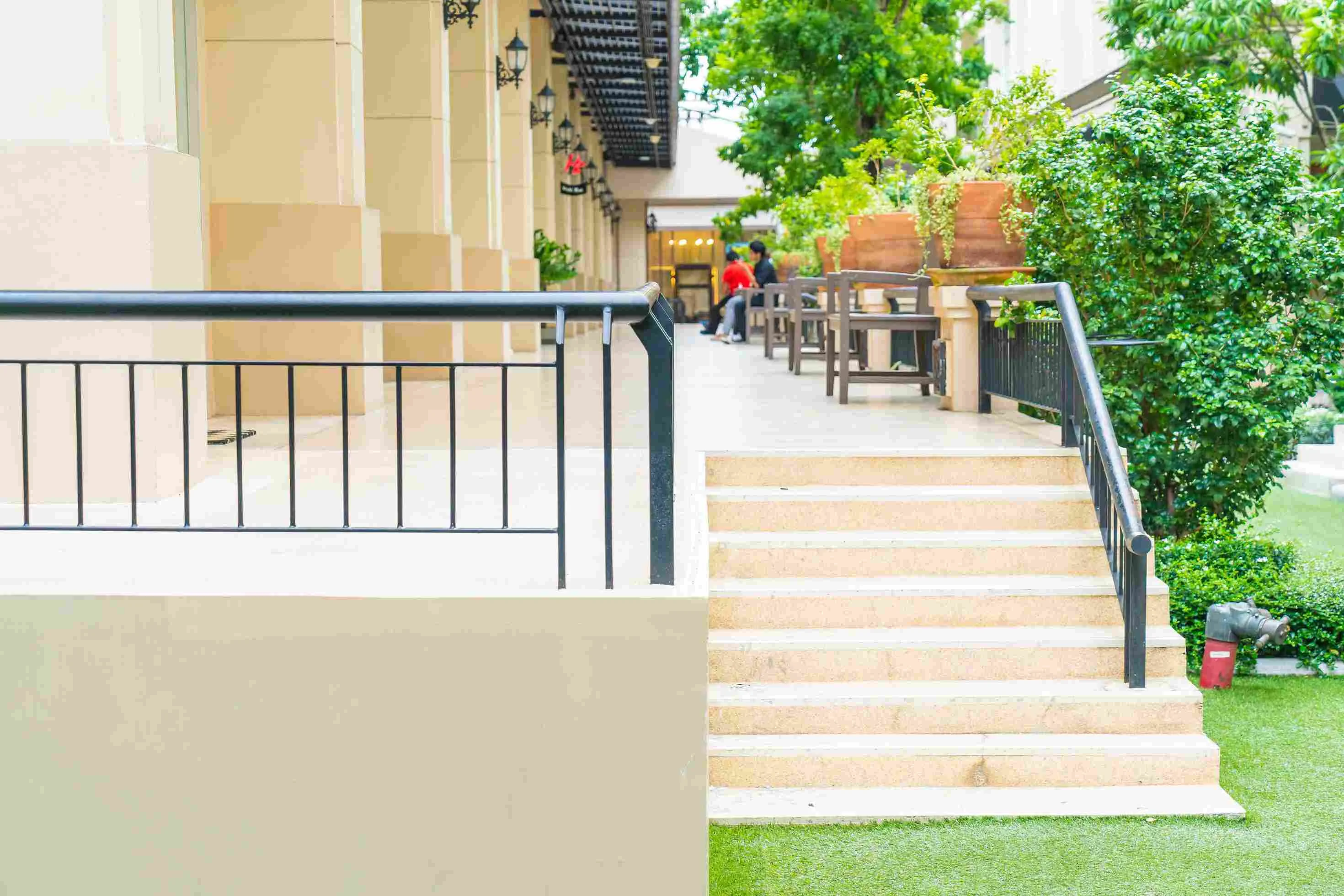

Best outdoor stair railing materials explained. Learn durability, maintenance, and cost differences between aluminum, steel, vinyl, and wood.
Walk up to your staircase right now. Grab the railing. Give it a shake.
If something moved that shouldn’t have, or if the finish came off on your hand, you’ve already got your answer. The material failed. And honestly? That happens more than people want to admit, mostly because the decision about which railing to install got made based on price or looks, with zero thought about what outdoor weather actually does to materials over time.
This guide is specifically for outdoor stairs. Not indoor, not covered porches, not “mostly sheltered.” Full outdoor exposure. Rain, sun, humidity, temperature swings, the whole thing.
The mistake almost everyone makes first
People shop for outdoor railings the same way they shop for indoor furniture. They look at it, decide if it suits the house, check the price, and order it.
Three years later they’re sanding rust spots on a Saturday afternoon wondering what went wrong.
What went wrong is that outdoor railing material gets tested every single day by conditions that don’t care what the product looked like in a catalog photo. UV radiation eats through cheap powder coats. Moisture finds its way into porous surfaces, freezes overnight, expands, and cracks things open from the inside. Salt air in coastal areas? It’ll quietly dissolve untreated metal faster than most people expect.
The question isn’t “does it look good.” The question is “what will this look like in 2027, sitting outside in all weather, touched by hundreds of hands.”
That’s the framing. Now let’s go through the actual options.
Benefits of Double Glazed Windows for Homes in Pune
Read this blog
Aluminum why most outdoor railing projects end up here
There’s a reason aluminum dominates the residential outdoor railing market right now. Actually, there are a few reasons.
The big one is corrosion. Aluminum doesn’t rust. That’s not marketing language, it’s chemistry. When aluminum meets oxygen and moisture, it forms aluminum oxide which bonds to the surface and acts as its own protective layer, instead of flaking off like iron rust does and exposing raw metal underneath. So even before any coating is applied, aluminum is already doing something steel and iron aren’t.
Slap a quality powder coat on top of that, and you’ve got a railing that can genuinely handle coastal salt air, mountain freeze-thaw cycles, and humid subtropical summers without needing you to do much of anything.
Weight is the other thing worth mentioning, especially if you’re planning to install this yourself. Aluminum is roughly a third of steel’s weight. That shows up in cutting, handling, drilling, fastening every part of the installation process is physically easier. Contractors notice this too, which is part of why aluminum jobs tend to cost less in labour than steel.
The one legitimate weakness: aluminum dents more easily than steel if it takes a hard direct impact. For a staircase railing on a residential property, this almost never comes up in real life. Heavy impact situations industrial loading areas, busy commercial entrances that’s a different conversation.
Steel strong, but probably more than you need
Steel is stronger than aluminum. True statement. And for certain applications, that actually matters.
High-traffic commercial staircases. Building entrances that see a few hundred people a day. Industrial settings where equipment gets moved around near railings. These are places where steel’s extra structural capacity earns its cost.
For a house? For a residential deck with a family using it? The strength argument mostly disappears.
What doesn’t disappear is the maintenance question. Untreated or poorly finished steel corrodes outdoors. It’s not a matter of if, it’s a matter of when. The fix is proper surface treatment hot-dip galvanizing, powder coating over a primer, or going with stainless steel, which handles outdoor exposure considerably better than standard mild steel. The key thing is specifying this upfront, not assuming the product comes protected just because it’s labeled for outdoor use.
Installation is also heavier and more involved than aluminum. Not a dealbreaker, just a real factor in project cost and timeline.
Wrought iron the one that looks incredible and costs accordingly
Nobody’s going to argue that wrought iron doesn’t look good. On the right style of home traditional, colonial, craftsman a set of hand-forged iron railings with a matte black finish is genuinely hard to beat aesthetically. The weight of it, the detail possible in the design, the way it ages if maintained well. There’s a visual quality there that other materials don’t quite replicate.
The trade is maintenance. Leave wrought iron outdoor railing uncoated or let the finish wear without touching it up, and rust follows. Not slowly either. The maintenance cycle for wrought iron outdoors is real work inspect regularly, catch early rust, treat it, recoat before the finish gets thin. Some homeowners are completely fine with this. They enjoy the upkeep as part of owning something with craft behind it.
Others realize two years in they didn’t actually plan for it.
Cost also sits higher than most other options here, largely because quality wrought iron work tends to be custom fabricated rather than off-the-shelf. If budget and maintenance effort are concerns, aluminum gives you much of the same visual versatility with a lot less ongoing work.
Vinyl worth more credit than it gets
Vinyl railings don’t show up in design magazines, but they solve a real problem for a lot of homeowners.
They don’t rust. They don’t rot. They don’t need painting. In moderate climates with normal residential traffic, vinyl does the job and demands almost nothing from you in return. Installation is straightforward enough for most DIY projects. And the price is significantly lower than metal options.
Where vinyl starts to struggle is the extremes. Intense heat can make it slightly flexible and soft. Hard freezes make it brittle. A sharp impact in cold weather can crack it where metal would just dent. So, for a property in Phoenix in August, or northern Canada in January, the performance picture changes.
Composite materials are worth looking at in the same budget range they handle moisture better than vinyl and give a warmer visual appearance, something closer to wood without the maintenance wood demands.
Wood honest about the reality
Cedar looks spectacular on a staircase. So does redwood. Natural wood brings a warmth and character to an outdoor staircase that no manufactured material quite achieves. There’s a reason people keep wanting it.
The problem is weather. Specifically, what weather does to untreated or under-maintained wood over time. It absorbs moisture. It swells. It dries out, contracts, cracks along the grain. Water gets into those cracks. In humid climates or anywhere with real rainfall, wood railings outdoors need consistent sealing, staining, or painting not once, but on a recurring schedule, every year or every other year depending on the product and climate.
Miss a couple of cycles and the wood doesn’t slowly get worse. It fails in chunks soft spots, rot sections, splits through the post.
For covered outdoor areas in dry climates, with a homeowner who genuinely stays on top of maintenance, wood is viable and beautiful. For fully exposed stairs in a rainy or humid region, the honest math on ten years of labor and materials usually tips toward a lower-maintenance option.
Four things to sort out before you buy anything
1. What climate is this railing actually sitting in?
Not your region in general the specific conditions at your property. Coastal? Salt air changes the calculus entirely toward aluminum and stainless. Heavy snowfall with freeze-thaw? Avoid materials that crack under thermal stress. High UV exposure year-round? Coating quality matters more than material choice.
2. How much maintenance will you actually do?
Most people overestimate this. Be realistic based on how you handle other outdoor maintenance on your property. If the gutters don’t get cleaned as often as they should, the railing won’t either. Pick a material that matches your real habits, not your aspirational ones.
3. What’s the daily usage level?
A residential staircase and a commercial building entrance are not the same application. The load requirements, the frequency of contact, the likelihood of impact all different. Sizing your material selection to actual traffic matters.
4. What does your local building code say?
This gets skipped more than it should. Codes specify railing height minimums, load requirements, baluster spacing, and sometimes approved material or finish specifications. Check before purchasing. Finding out post-installation that something needs to change is expensive and avoidable.
Putting it all together
For most outdoor stair railing projects residential, moderate to heavy weather exposure, typical budget powder-coated aluminum is where you land after working through the options honestly. Corrosion-resistant by nature, light enough for reasonable installation, available in enough design options to work on most properties, and genuinely low on the maintenance scale once it’s up.
Steel makes sense when the application genuinely demands higher structural performance than aluminum provides. Composite and vinyl cover budget-conscious projects in mild climates. Wrought iron belongs where the aesthetic is worth the upkeep trade-off and the budget supports custom fabrication. Wood works in covered, dry settings where someone will actually stay on top of it.

