

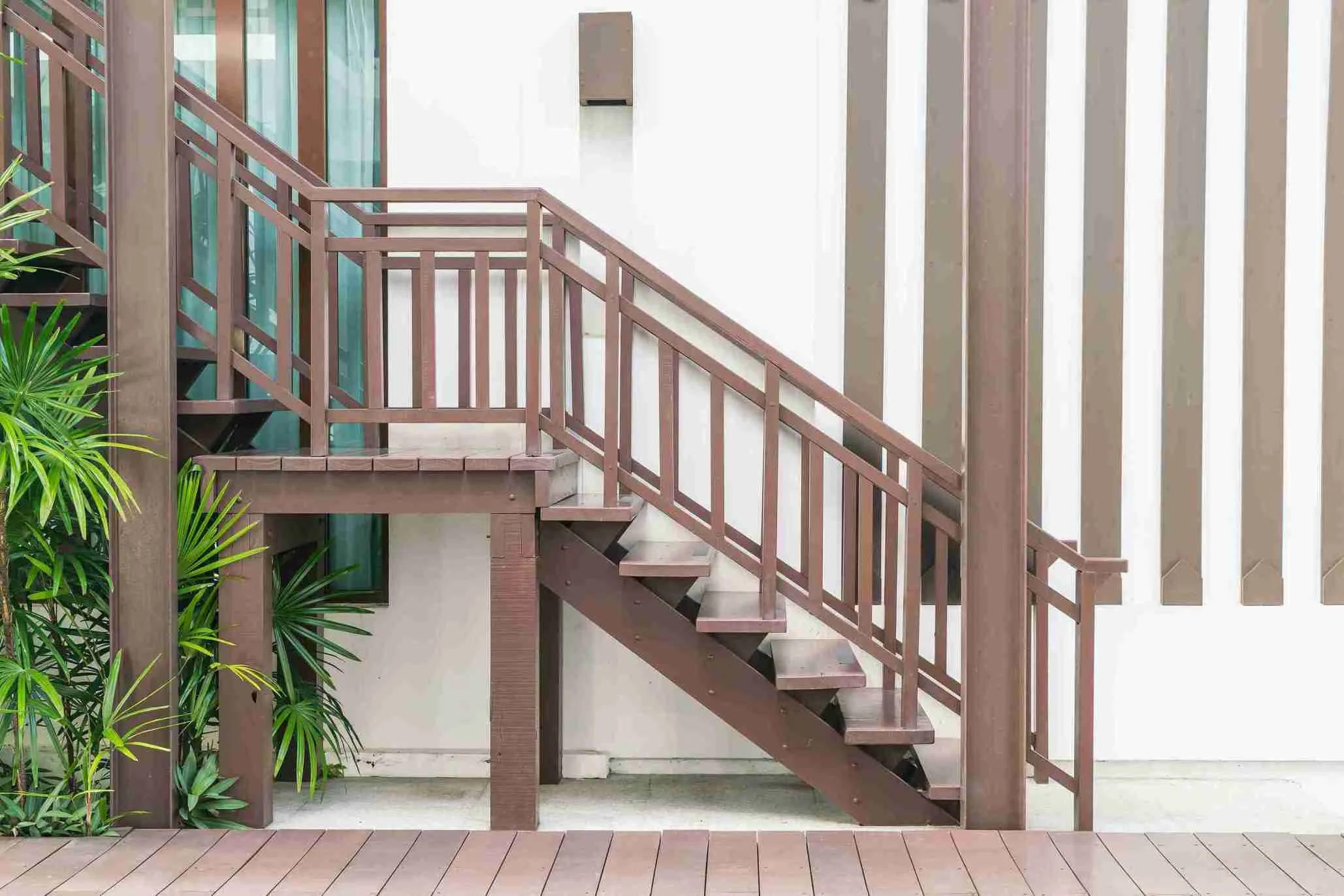

Explore PVC railing: what it is, cons, cost, and comparisons with wood, vinyl, and aluminum for your deck or porch.
Go price out a deck railing project and within about ten minutes someone a contractor, a salesperson, a YouTube video is going to bring up PVC. Sometimes they call it vinyl. Sometimes cellular PVC. Occasionally just “low maintenance railing” without specifying what’s actually in it.
If you’ve never looked into it before, PVC railing can feel like one of those things where everyone assumes you already know what it is. You don’t necessarily. So here’s a proper explanation, including the parts most product pages quietly skip over.
What Is PVC Railing?
PVC stands for polyvinyl chloride. It’s the same base material used in plumbing pipes, window frames, exterior trim boards construction applications where something needs to hold up outdoors without rusting or rotting. Railing systems made from PVC have been around for a few decades now, though the early versions had a rough reputation for yellowing and going brittle in cold weather. The products today are considerably better engineered, mostly because manufacturers figured out that raw PVC alone doesn’t survive outdoor exposure well enough and started blending in additives.
Those additives matter more than most buyers realize. UV stabilizers slow down the color fade and surface chalking that happens when plastic sits in direct sun for years. Impact modifiers make the material less likely to crack in cold temperatures. Some products include titanium dioxide specifically to hold the white colour steady over time. A PVC railing from a reputable manufacturer today is a pretty different product from what was being installed fifteen years ago.
One more thing worth knowing upfront a lot of PVC railing systems aren’t purely plastic. The posts and top rails often have an aluminum or galvanized steel insert running through the center. That insert is carrying most of the structural load. The PVC is essentially a weatherproof shell around a metal core. Some cheaper systems skip the reinforcement entirely and it shows, usually as flex or movement when you push on the railing. Something to ask about before committing to a product.
Benefits of PVC Railing
Moisture is where PVC genuinely earns its place outdoors. It doesn’t absorb water. At all. Rain hits it, runs off, nothing happens underneath. No swelling, no grain opening up, no slow rot working inward the way it does with wood that isn’t kept sealed. For an outdoor railing sitting through wet seasons year after year, that characteristic alone separates it from wood in a meaningful way.
Maintenance is the other honest selling point. Wash it down with soapy water when it gets dirty. That’s more or less it for most homeowners in most climates. No sanding, no repainting, no annual sealing ritual, no checking for rust spots after winter. People who’ve owned wood or wrought iron railings before tend to appreciate this more than people who haven’t because they know what the alternative actually involves on a recurring basis.
Cost sits lower than aluminum and composite for most product lines. And because PVC components are lightweight and generally designed to go together with mechanical fasteners or snap connections, installation is manageable for a reasonably capable DIYer. The combination lower material cost, easier installation makes it a genuinely practical choice for residential deck and porch projects where budget matters.
Benefits of Double Glazed Windows for Homes in Pune
Read this blog
PVC versus vinyl because this confusion comes up constantly
These two terms get used interchangeably and they’re not quite the same thing, which causes genuine confusion when you’re trying to compare quotes.
All vinyl railing is PVC-based. But what gets specifically marketed as “PVC railing” or “cellular PVC railing” tends to refer to a higher-grade formulation thicker profiles, denser compound, better additive packages, tighter manufacturing tolerances. Cellular PVC specifically has a slightly foamed internal structure that improves the strength-to-weight ratio compared to basic hollow vinyl extrusion.
Standard vinyl railing is the more basic version. Thinner walls, simpler construction, lower cost, and generally less resistant to UV and temperature variation over time.
In practical terms if you’re getting two quotes and one is noticeably cheaper; this is often where the difference lives. Same category of product on paper, meaningfully different in how they hold up at year four and year seven. Worth asking what grade of PVC you’re actually being quoted before making a decision on price alone.
PVC Railing vs Other Materials
- Wood:
PVC wins the maintenance comparison without much argument. Wood outdoors needs consistent sealing and treatment, PVC doesn’t. What wood has that PVC doesn’t is genuine character grain texture, natural variation, the way it ages when it’s properly maintained. The textured woodgrain finishes on some PVC products are better than they used to be, but they don’t really fool anyone standing close to it.
2. Aluminum:
Stronger material, handles temperature extremes better on both ends, doesn’t carry the same UV degradation risk, and looks more substantial. It also costs more, usually meaningfully so. For a project where long-term performance and appearance are the priority, aluminum has the edge. For a residential project where budget is tighter and low maintenance matters, PVC makes a reasonable case for itself particularly with internal reinforcement.
3. Composite:
Better UV and temperature performance than standard PVC, more natural-looking finish, generally holds up better over a longer timeline. The trade is upfront cost composite runs higher than PVC in most product lines. Over ten or fifteen years the gap narrows because composite tends to need less intervention, but the initial investment is higher.
Skylight Windows: Benefits, Types & Smart Design Ideas for Modern Spaces
Read this blog
When Is PVC Railing a Good Choice?
Standard residential deck or porch. Moderate climate no sustained extreme heat, no harsh cold winters. Homeowner who wants something that goes up without difficulty and stays clean without regular maintenance. Budget that doesn’t stretch to aluminum or composite.
That’s the core fit for PVC railing. It’s not the strongest option. It’s not the most premium-looking option. But it solves the actual problem most residential homeowners have, which is finding something that holds up outdoors without demanding ongoing attention and doesn’t cost as much as the metal alternatives.
Where it gets shakier full sun exposure in a hot climate where cheap UV protection becomes a real problem within a few years. Harsh cold regions where brittleness becomes a practical concern. High-end properties where the railing is a visible detail and the appearance difference between PVC and aluminum or composite actually matters to how the space looks and feels.
Coastal properties with heavy salt air are another one. Salt air is genuinely aggressive toward a lot of materials and PVC handles it better than iron or uncoated steel but marine-grade aluminum is the stronger long-term answer in that specific environment.
What to Ask Before Buying PVC Railing
Does the system include internal post and rail reinforcement, and what material is it? What UV additive package is in the compound, and what does the warranty cover specifically for colour retention? What are the maximum span ratings for unsupported rail sections? And what’s the rated temperature range for installation and ongoing performance?
These aren’t trick questions. A manufacturer or supplier who knows their product answers all four without hesitation. Vague answers on UV warranty and temperature rating are worth paying attention to that’s usually where the product has a known limitation they’d prefer not to highlight in the sales conversation.
PVC railing is a legitimate option for a lot of outdoor projects. Just know what you’re buying before the truck arrives.